In the evolving gig economy of 2026, Amazon Flex remains one of the most talked-about delivery platforms for independent drivers. With promises of flexible hours and competitive pay, it attracts thousands of freelancers who want control over their work schedule and income. But is Amazon Flex really worth it? This review dives deep into the platform’s earnings model, features, hidden costs, driver experience, pros and cons, and real-world tips to help you decide if it’s right for you.
What Is Amazon Flex?
Amazon Flex is a delivery service that allows independent contractors to pick up and deliver packages using their own vehicles. Unlike traditional employment, drivers known as Flex drivers — choose their delivery blocks and are paid per block, typically in the range of 15–30 minutes of deliveries.
Amazon Flex is available in many cities across the United States and expanding to international markets. In 2026, it remains a popular choice among gig workers seeking flexible income options.
How Amazon Flex Works
Sign-Up and Application
To join Amazon Flex, you need:
A valid driver’s license
A smartphone (Android or iOS)
Insurance and a qualifying vehicle
Background check approval
Once approved, you get access to the Flex app, where you can view delivery blocks and schedule them.
Delivery Blocks
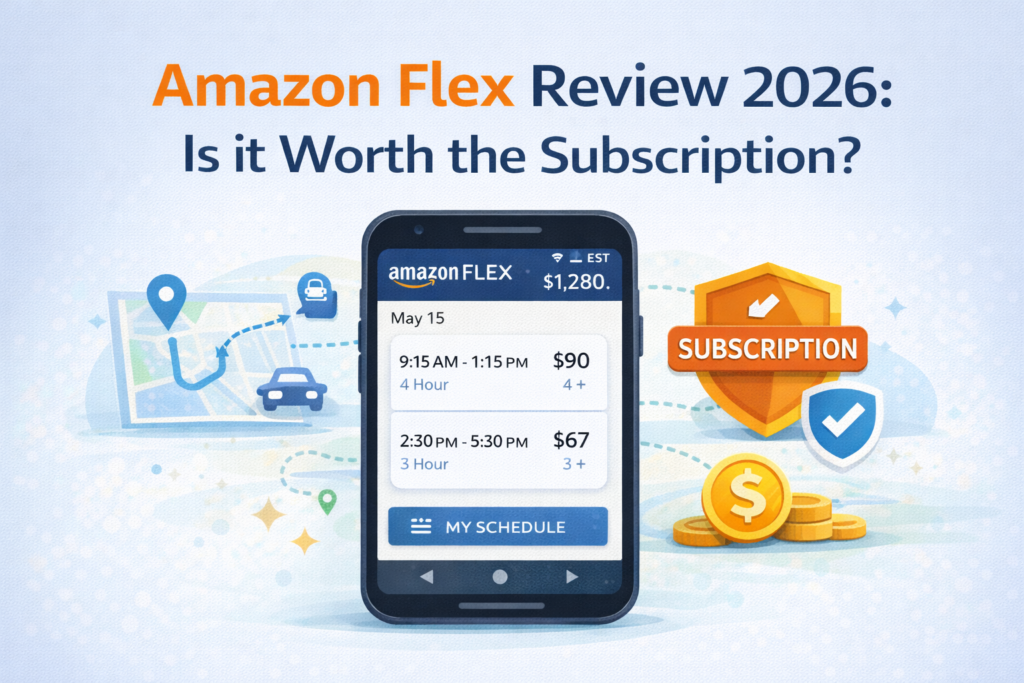
Rather than hourly shifts, Amazon Flex uses “blocks” — designated windows of time you commit to delivering packages. Each block shows:
Start and end time
Estimated number of packages
Location of the pickup
Estimated earnings
Drivers can accept or decline blocks based on their schedule.
Types of Deliveries
Amazon Flex offers multiple delivery types:
Priority Deliveries: Usually smaller packages with higher pay per block.
Prime Now: Grocery and essentials delivered quickly.
Standard Deliveries: Bulk packages with variable pay rates.
Oversized: Larger items that require more effort and time.
Each delivery type comes with slightly different pay structures.
How Much Can You Earn with Amazon Flex?
Earnings vary by market, time of day, and delivery type. In 2026, average payouts per block range between $16–$30, with some premium blocks paying higher rates. Over a 4-hour day, this can equate to $60–$120 or more.
However, earnings are not guaranteed, and availability of blocks varies by region and demand. Urban markets typically offer more frequent delivery opportunities than suburban or rural areas.
Is There a Subscription to Amazon Flex?
No, Amazon Flex does not require a traditional monthly subscription like some gig apps. However, drivers should be aware of potential out-of-pocket costs, including:
Gas and fuel
Vehicle maintenance
Self-employment taxes
Insurance premiums
These ongoing costs impact net earnings and should be part of any assessment of worth.

How Drivers Get Paid
Drivers are paid either:
Weekly via direct deposit
Through the Amazon Flex app payout schedule
Income is reported on a 1099 form for tax purposes, so drivers are responsible for setting aside money for self-employment tax and income tax at the end of the year.
Costs Drivers Must Consider
Being an independent contractor means you’re responsible for:
Gas expenses
Routine maintenance like oil changes
Tire wear and repairs
Insurance that covers business or delivery driving
Because these costs are not reimbursed, they reduce your net income significantly.
Features of the Amazon Flex App
Intuitive Scheduling
Drivers choose delivery blocks that fit their schedule. The app shows all available blocks within a specified time frame.
Real-Time Navigation
Integrated GPS and routing help drivers optimize routes and complete deliveries efficiently.
Delivery Detail View
Each block provides the number of packages, address clusters, and estimated driving routes before you accept it.
Earnings Overview
The app shows your upcoming and past payouts and weekly totals to help with planning.
These tools make the platform accessible but still require good time management and route discipline.
Pros of Driving for Amazon Flex
Flexible Hours
You decide when and where to work. This makes it ideal for students, supplement income, or part-time freelancers.
No Subscription Fee
There’s no recurring monthly cost to access delivery blocks, which lowers the barrier to entry.
Fast Payouts
Unlike some gig platforms with weekly or delayed payouts, Amazon Flex often pays on a predictable schedule.
Earnings Potential
In busy markets and peak times, drivers can earn more with surge blocks and premium deliveries.
Cons of Driving for Amazon Flex
Unstable Block Availability
In some areas, delivery blocks fill up quickly or are scarce, especially during slow seasons.
Out-of-Pocket Costs
Drivers pay for fuel and maintenance, which can significantly lower take-home pay.
No Benefits
As an independent contractor, you don’t receive health insurance, paid time off, or retirement benefits.
Taxes
Managing self-employment taxes can be confusing and open you up to penalties if not handled properly.
Hidden Costs to Watch Out For
Although there is no formal subscription fee, the following costs are often overlooked:
Insurance Upgrades: Some insurers require commercial or business use coverage for delivery driving.
Parking Fees: Urban deliveries often involve paid parking or tolls.
Vehicle Depreciation: High mileage accelerates depreciation, reducing long-term vehicle value.
GPS and Phone Data: Constant app use may increase mobile data usage.
All of these hidden costs reduce your effective earnings if not tracked properly.
Amazon Flex vs Other Gig Platforms
| Feature | Amazon Flex | Competitor (e.g., DoorDash) | Competitor (e.g., Uber Eats) |
|---|---|---|---|
| Subscription Fee | ❌ None | ❌ None | ❌ None |
| Earnings Model | Per Block | Per Delivery | Per Delivery |
| Taxes | Self-Employed | Self-Employed | Self-Employed |
| Benefits | ❌ | ❌ | ❌ |
| Tips | ❌ | ✅ | ✅ |
Unlike food delivery platforms, Amazon Flex typically does not allow tipping, which can reduce total earnings potential.
Tips to Maximize Your Earnings
Track Mileage for Deductions
Use mileage tracking apps like MileIQ or TripLog to record business miles and help maximize tax deductions.
Choose Blocks Wisely
Look for blocks that fit efficiently into your existing route to reduce gas and time costs.
Deliver During Peak Times
Weekends, evenings, and holidays generally offer more blocks and higher pay.
Manage Your Taxes
Set aside 20–30% of your earnings for taxes to avoid surprises at filing time.
Real-World Driver Feedback (2026)
Many drivers praise flexibility, but some report:
Block scarcity in smaller markets
Fluctuating earnings from week to week
Higher maintenance costs than expected
Driver experience varies significantly by region, vehicle efficiency, and work habits.

Security and Safety Considerations
Amazon Flex requires a background check and valid insurance. Drivers should:
Follow safety guidelines
Use GPS but stay aware of surroundings
Avoid hazardous deliveries or unsafe neighborhoods
Safety precautions protect drivers and property.
Is Amazon Flex Worth It in 2026?
The answer depends on your goals.
Worth it if:
You want flexible part-time income
You already drive regularly
You can track earnings and expenses effectively
Less ideal if:
You want benefits or job security
You don’t track expenses carefully
You live in a low-demand region
Amazon Flex can be a great supplemental income source when used strategically. However, net earnings often come down to how effectively you manage costs and choose gigs.
Conclusion
Amazon Flex continues to be a viable on-demand delivery option in 2026. It offers flexibility, predictable payment schedules, and a low barrier to entry. There’s no subscription fee, but hidden costs — such as fuel, maintenance, insurance, and taxes — affect your actual earnings.
Overall, Amazon Flex is worth it for drivers who understand the platform well and manage their finances effectively. If you treat it as a business and plan strategically, the earnings potential can be solid. However, for drivers seeking stable income with benefits, traditional employment may be a better match.