Samsung Galaxy A18 LTE Arrives in Korea as the Wider Galaxy A Series Refresh Takes Shape
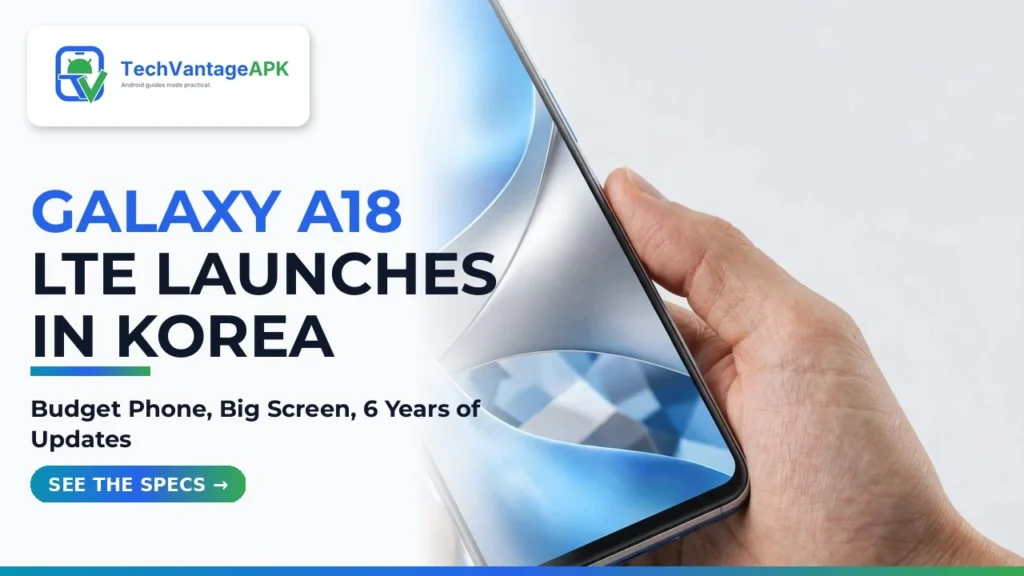
Samsung has launched the Galaxy A18 LTE in Korea, giving shoppers in that market a new affordable Galaxy option at a moment when the wider Galaxy A lineup is also coming into clearer focus. According to a ChosunBiz report, the Korea launch took place on October 30, 2026, with a price of 425,700 won. The report describes a phone built around everyday essentials rather than flagship extravagance: a large display for video and browsing, a substantial battery for long days away from a charger, and Samsung software features that have become increasingly central to how people use affordable phones, including tools for searching what is on screen and getting help from an on-device assistant.
For readers following Samsung from outside Korea, the launch matters for two reasons. First, it confirms that the Galaxy A18 name is now a real, shipping product rather than only a rumour or a regional listing. Second, it arrives alongside a broader unveiling of the Galaxy A18 and Galaxy A08, which helps explain where the Korea LTE model sits in the family and what buyers in other markets may expect when their own versions appear. The picture is not yet complete, and this article is careful to separate what has been reported about the Korea model from what has been described for the wider lineup, and from what Samsung has not yet confirmed at all.
That distinction matters because affordable phones often vary by market. A model name can stay the same while the processor, camera setup, battery size, memory configuration, or supported networks change from one country to another. Shoppers who compare a Korea listing with a listing from another region can easily assume they are looking at the same phone when they are not. This guide therefore treats the Korea LTE variant on its own terms, uses the wider A18 and A08 details only where they are clearly described as part of that broader unveiling, and flags anything unconfirmed rather than filling gaps with guesses.
What the Korea Launch Report Says
The ChosunBiz report places the Galaxy A18 LTE launch in Korea on October 30, 2026, at 425,700 won. It says the phone is sold via three carriers plus an unlocked route, which is a helpful detail for Korean shoppers because it means the model is not locked to a single network or a single way of buying. Carrier availability and unlocked availability often affect promotions, trade-in options, and how easily a buyer can switch networks later, although the report supplied for this article does not detail those commercial terms, and this article does not invent them.
The same report describes a 6.7-inch FHD+ Super AMOLED display and a 5,000 mAh battery. Those two details alone tell a buyer a great deal about the intended experience. A display of that size is aimed at people who watch video, read articles, follow social feeds, and play casual games on their phone, and who prefer larger text and larger touch targets. A battery of that capacity is aimed at people who want to get through a full day of mixed use without constantly hunting for a charger, although real battery life always depends on brightness, signal strength, app use, and settings, and no single capacity figure can promise a particular number of hours for every person.
The report also highlights Gemini and Circle to Search as part of the Korea model. Circle to Search lets a person circle, highlight, or tap something on screen to search for it without switching apps or typing a query, which is especially useful when shopping, identifying an object, translating text on screen, or learning more about something in a photo or video. Gemini, as an assistant, is positioned for questions, drafting help, summarising, planning, and other everyday tasks. Together, those features suggest Samsung is continuing to push its most useful software conveniences down into more affordable price tiers, rather than reserving them only for premium models.
How the Korea LTE Model Should Be Understood
It is important to read the Korea LTE details narrowly. The report supplied for this article gives the launch date, the price in won, the display size and type, the battery capacity, the assistant and search features, and the sales channels. It does not give a full specification sheet for the Korea LTE variant. In particular, this article does not state a refresh rate, a charging wattage, or a RAM and storage configuration for the Korea LTE model, because those details were not included in the information supplied and should not be assumed from another market version.
That restraint may feel frustrating to a shopper who wants a complete comparison before buying, but it is the honest approach. Affordable Galaxy models have a long history of regional variation, and a specification taken from a different country could mislead a Korean buyer about exactly what is in the box or what the phone supports. Until Samsung publishes a full Korea specification, or a reliable Korea-specific listing confirms the remaining details, the safest summary is the one in this article: a large Super AMOLED display, a substantial battery, Gemini and Circle to Search, three carriers plus unlocked sales, and a price of 425,700 won.
Buyers in Korea who are considering the phone should therefore check the carrier listing or Samsung Korea listing for their exact variant before purchase, especially for memory, storage, charging, network bands, and included accessories. Those are precisely the details that can differ, and they can affect long-term satisfaction far more than a headline feature. A phone that looks identical in photos can feel very different if the storage is tight, if charging is slower than expected, or if a particular network feature is absent.
The Wider Galaxy A18 and A08 Unveiling
Beyond Korea, the wider unveiling describes the Galaxy A18 and Galaxy A08 as a pair of affordable phones sharing a common philosophy: practical performance, useful cameras, long software support, and everyday durability, without flagship pricing. The processor named for the wider lineup is the Helio G99+, paired with LPDDR5 memory and RAM Plus. RAM Plus is Samsung terminology for using part of storage as additional virtual memory when needed, which can help with multitasking and keeping apps ready in the background, although it is not a substitute for physical memory in every situation and its benefit depends on how a person uses the phone.
The wider description also emphasises software and artificial intelligence features that cut across both models. Both are described as offering Circle to Search, including Find the Look, alongside Gemini and Perplexity agents. Find the Look is presented as a way to search visually for fashion and style inspiration, which fits naturally with Circle to Search: see something you like on screen, search for it, and explore similar looks or items. The inclusion of multiple agents reflects a broader shift in phones, where the assistant is no longer a single tool for setting timers but a layer that helps with searching, summarising, creating, and navigating everyday tasks.
For buyers, the practical question is not which assistant name sounds most impressive, but which tasks actually become easier. Searching from an image, getting a quick summary of a long page, drafting a message, or identifying a product are the kinds of everyday jobs where these tools earn their place. They are most valuable when they work quickly, respect privacy, and stay out of the way when they are not needed. Samsung positioning these tools on affordable models suggests the company expects them to become baseline expectations rather than premium extras.
Design and Everyday Durability
Design details supplied for the wider lineup give the Galaxy A18 a glass-fiber-reinforced polymer back. That material choice is interesting because it aims to balance durability, weight, and cost. A reinforced polymer back can resist everyday knocks and scratches differently from glass, while keeping the phone lighter and more affordable to produce and repair. It also signals that Samsung is thinking about how affordable phones are actually used: carried without a case by some people, dropped occasionally, slipped into pockets and bags, and expected to keep looking respectable over years of use.
Both wider models are described with IP64 protection. That rating, in general terms, relates to resistance to dust and splashes, and it is a welcome addition on affordable phones because real life involves rain, dusty environments, kitchen splashes, and sweaty workouts. It does not mean a phone is designed for swimming, prolonged submersion, or exposure to soaps, seawater, or pressurised water, and buyers should always follow the manufacturer guidance for their exact model. Still, having a stated level of splash and dust resistance gives more confidence than having no rating at all.
Colour options supplied for the wider lineup help buyers picture the range. The Galaxy A18 is described in Black, Silver, and Light Blue, while the Galaxy A08 is described in Dark Blue, Silver, and Green. Colours may vary by market and by carrier, so a colour available in one region is not guaranteed everywhere, but the palette as described is restrained and practical: neutral options for people who want a phone to blend in, plus lighter and more colourful options for people who want a little personality without a loud finish.
Cameras: What Each Model Offers
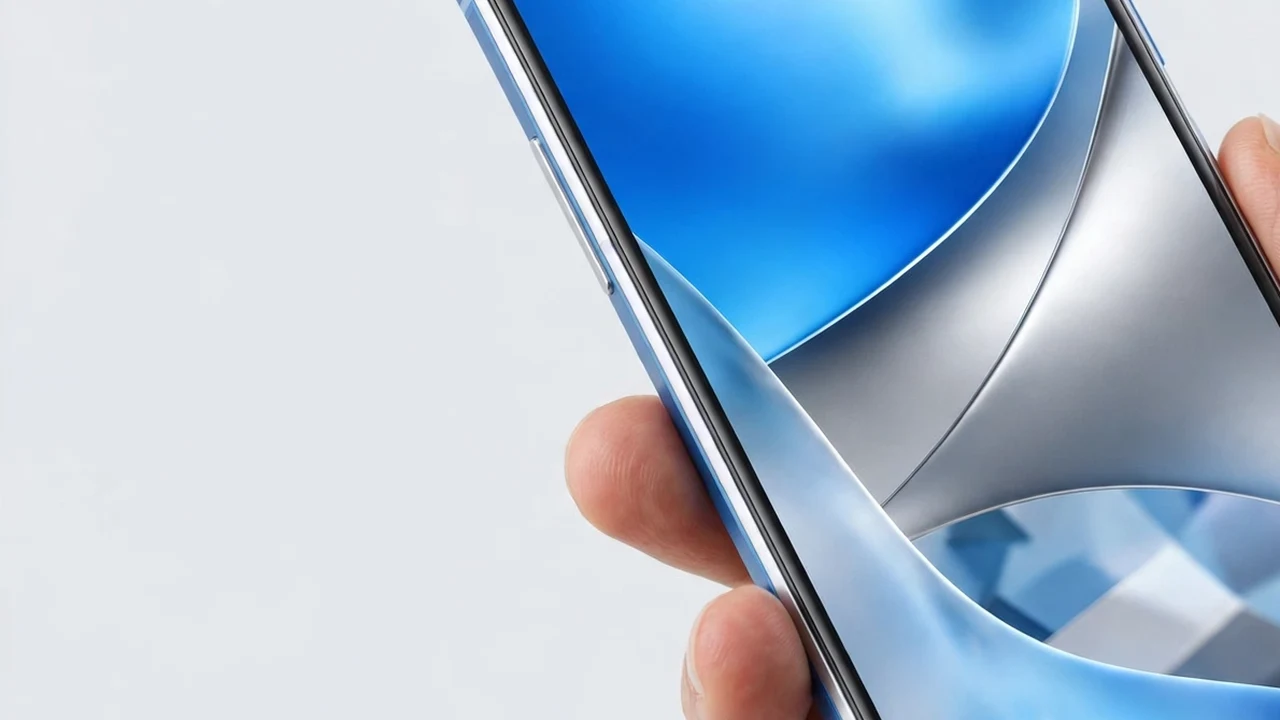
Camera setup is one of the clearest differences between the two wider models. The Galaxy A18 is described with a triple camera system: a 50MP wide camera, a 5MP ultra-wide camera, and a 2MP macro camera. That combination covers the three most common everyday shooting situations on an affordable phone. The main wide camera handles portraits, food, landscapes, and general photos in good light. The ultra-wide camera captures broader scenes, group shots, interiors, and architecture where stepping back is not possible. The macro camera is for very close subjects, such as small objects, textures, flowers, and details that a main camera cannot focus on at close range.
The Galaxy A08 is described with a different camera balance: a 50MP AF main camera, a 2MP depth camera, and an 8MP front camera. The main camera shares the same headline resolution as the A18 main camera, which is reassuring for buyers who care most about everyday photos. The depth camera supports portrait-style shots where the subject stays sharp and the background is softened, although the quality of that effect always depends on software as much as hardware. The front camera resolution is explicitly given for the A08, which matters for video calls, selfies, and social content, all of which have become primary uses rather than afterthoughts.
It is worth remembering that megapixels alone do not determine photo quality. Lens quality, sensor size, image processing, stabilisation, low-light performance, and colour handling all matter, and none of those are fully captured by a single resolution figure. A 50MP main camera can produce excellent daylight photos and still struggle in dim restaurants or at night if processing and sensor performance are limited. Buyers should therefore look for real sample photos from their exact model and market when possible, and judge cameras on the kinds of photos they actually take, rather than on specification headlines alone.
Battery, Security, and Long-Term Software Support
Battery capacity is another clear difference in the wider lineup. The Korea LTE model is reported with a 5,000 mAh battery, while the wider Galaxy A08 is described with a 6,000 mAh battery. That larger capacity on the A08 suggests a phone aimed squarely at people who prioritise endurance above all else, such as heavy video watchers, travellers, delivery and field workers, or anyone who cannot reliably charge during the day. The A18, by contrast, balances battery with other features, including its triple camera system and reinforced back material.
Security and longevity are described in strong terms for both wider models. Knox Vault is named as part of the package, which is Samsung security technology designed to protect sensitive information such as passwords, biometric data, and cryptographic keys in a separate, hardened area. For everyday buyers, the practical benefit is confidence: a phone that holds banking apps, work email, health information, and personal photos should treat that data as something worth protecting, not as an afterthought.
Software support is described as up to six generations of operating system upgrades plus six years of security updates. That is a significant promise for affordable phones, where short support windows have historically pushed people to replace devices sooner than they wanted. Long support means the phone can stay secure and gain new features for longer, which improves value, reduces electronic waste, and makes the phone a safer choice for families, students, and anyone buying on a tight budget. As always, the exact upgrade schedule depends on Samsung rollout plans for each market and model, and buyers should confirm the support promise for their specific variant.
Galaxy A18 Versus Galaxy A08 at a Glance
The table below summarises the wider lineup differences using only the details supplied for this article. It is not a full specification sheet, and it does not mix Korea LTE details into the wider models except where the Korea model is explicitly noted elsewhere in this article.
| Feature | Galaxy A18 (wider unveiling) | Galaxy A08 (wider unveiling) |
|---|---|---|
| Rear cameras | Triple: 50MP wide, 5MP ultra-wide, 2MP macro | 50MP AF main, 2MP depth |
| Front camera | Not specified in the details supplied | 8MP front camera |
| Battery (wider models) | Not specified separately from the Korea LTE report in the details supplied | 6,000 mAh battery |
| Back material | Glass-fiber-reinforced polymer back | Not specified in the details supplied |
| Colours described | Black, Silver, Light Blue | Dark Blue, Silver, Green |
| Shared features described | Circle to Search including Find the Look, Gemini and Perplexity agents, IP64, Knox Vault, up to six generations of OS upgrades and six years of security updates, Helio G99+ processor, LPDDR5, RAM Plus | |
Read as a buying guide, the table suggests a simple split. Choose the A18 direction if a versatile rear camera system matters most, especially ultra-wide shots and close-up macro photos. Choose the A08 direction if maximum battery endurance and a clearly specified front camera matter most, and if the simpler rear camera setup still covers everyday photography. Both directions share the same software, security, and durability story, which means the choice is less about ecosystem and more about which everyday trade-off fits a particular lifestyle.
Full Details Supplied for This Article
| Topic | Detail as supplied |
|---|---|
| Korea launch | Galaxy A18 LTE launched in Korea on October 30, 2026, reported by ChosunBiz |
| Korea price | 425,700 won |
| Korea sales channels | Three carriers plus unlocked |
| Korea display | 6.7-inch FHD+ Super AMOLED |
| Korea battery | 5,000 mAh battery |
| Korea software highlights | Gemini and Circle to Search |
| Wider processor | Helio G99+ processor, LPDDR5, RAM Plus |
| Wider AI and search | Circle to Search including Find the Look, Gemini and Perplexity agents |
| Durability and security | IP64, Knox Vault, up to six generations of OS upgrades and six years of security updates |
| Philippines A08 pricing | From PHP 11,190 for one configuration and PHP 13,090 for another configuration, with up to PHP 1,200 off until November 30 |
| Philippines A08 configurations described | Configurations described as 4+64 and 4+128 |
| Philippines A18 timing | Galaxy A18 in Philippines by December 2026 |
The table above is deliberately conservative. Where a detail was not supplied, the table says so rather than borrowing a figure from another phone or another market. That approach protects readers from the most common affordable-phone mistake: assuming that two phones with the same name are identical everywhere. They often are not, and a careful buyer checks the local listing.
Philippines Pricing and Availability
For readers in the Philippines, the details supplied are more concrete on pricing for the Galaxy A08. The A08 is described as available in the Philippines from PHP 11,190 for the configuration described as 4+64, and PHP 13,090 for the configuration described as 4+128, with up to PHP 1,200 off until November 30. That promotional window matters for budget buyers, because a discount of that size can change which configuration is affordable or whether accessories and a case fit into the same budget.
The Galaxy A18 is described as arriving in the Philippines by December 2026. No Philippines price for the A18 is given in the details supplied for this article, so this article does not estimate one. Pricing for a new model in a new market depends on taxes, carrier and retail terms, launch promotions, and the exact configuration offered, and any guessed figure would risk misleading a reader who is saving for a purchase. Readers in the Philippines who want the A18 should watch for the official local announcement closer to December, and compare the local configuration and price with the wider lineup details in this article rather than assuming the Korea price converts directly.
The Philippines details also illustrate a broader point about affordable phone launches: they roll out market by market, not everywhere at once. A phone can be on sale in Korea while still weeks away in another country, and pricing and promotions can differ sharply. That staggered rollout is normal, but it means early reviews and listings from one country should be treated as helpful background, not as a guarantee of what will be sold locally.
Buying Advice for Readers in the United States
No United States launch has been announced in the details supplied for this article, and United States readers should plan on that basis. That means there is no confirmed United States price, carrier availability, release date, or United States-specific configuration to report here. Anyone in the United States who is tempted by the Galaxy A18 LTE or the wider A18 and A08 should treat import options with caution rather than enthusiasm alone.
Importing a phone designed for another market can create practical problems that are easy to overlook. Network bands may differ, which can affect coverage, call quality, and data speeds on a United States carrier. Warranty and repair support may be limited or unavailable, which matters greatly for a phone expected to last for years. Software updates may follow a different schedule, and some carrier features, payment features, or emergency features may behave differently. Accessories, chargers, and cases may also differ, although those are usually easier to solve than network or warranty issues.
For most United States buyers, the wiser path is to wait for an official United States announcement, if one comes, and to compare the Galaxy A18 family at that point with Samsung models already sold in the United States and with rival affordable phones that carry full United States warranty and network support. The features described here — a large Super AMOLED display, long software support, Knox Vault security, Circle to Search, and useful cameras — are attractive, but they are only fully valuable when the phone is properly supported where the buyer lives. A bargain import that cannot be repaired or that misses key network bands is rarely a bargain in practice.
United States readers who still want to explore an import should, at minimum, verify network band compatibility with their carrier before buying, confirm who will handle warranty and repairs, check the return policy of the seller, and confirm that the exact model supports the features they need. They should also budget for the possibility that software updates arrive later than on a United States model. If any of those checks cannot be completed confidently, waiting is the safer choice.
What Remains Unconfirmed
Several important details remain unconfirmed, and this article labels them clearly. The full specification sheet for the Korea LTE variant is not yet confirmed by Samsung in the information supplied here. That includes, but is not limited to, refresh rate, charging wattage, and RAM and storage for the Korea LTE model, none of which are stated in this article. Readers should not take a figure from another market version and apply it to the Korea model.
Similarly, some wider lineup details are described in general terms rather than as a complete specification for each model. Where this article says a detail was not specified in the information supplied, that is a genuine gap, not an oversight in writing. It means the detail should be checked against an official listing for the exact market and configuration before purchase. This is especially true for front camera details on the A18, battery details for the wider A18 beyond the Korea report, and back material for the A08.
Finally, no United States launch, price, or date is confirmed in the information supplied, and no Philippines price for the A18 is given. Those absences are themselves useful information: they tell readers where not to make assumptions. As official listings appear, they will fill these gaps, and any future update to this article should be judged against those official sources rather than against early rumours or converted prices.
Who Should Consider the Galaxy A18 Family
The Galaxy A18 family, as described, is aimed at buyers who want a dependable everyday phone without paying flagship prices. Students, families buying a first or second phone, workers who need a reliable device for messaging, maps, photos, and video, and anyone who values long software support will find the described package appealing. The large display helps with reading and video, the battery story helps with long days, and the security and update promises help with longevity.
Photography enthusiasts on a budget will likely focus on the A18 triple camera system, especially the ultra-wide and macro options that expand creative choices beyond a single main lens. Battery-first buyers will likely focus on the A08 and its larger described battery, accepting a simpler rear camera system in exchange for endurance. Neither choice is objectively better; the better choice depends on whether a buyer runs out of battery first or runs out of camera options first in daily life.
Buyers who need cutting-edge gaming performance, professional-grade low-light photography, or the fastest possible charging should look beyond this family or wait for full specifications to confirm whether those needs are met. Affordable phones make trade-offs by design, and the honest way to judge them is against everyday needs rather than against flagship benchmarks. On everyday needs — calls, messaging, browsing, video, social apps, photos in good light, navigation, and assistant help — the described A18 family looks well positioned.
Frequently Asked Questions
When did the Samsung Galaxy A18 LTE launch in Korea, and what does it cost there?
Answer: According to a ChosunBiz report, the Galaxy A18 LTE launched in Korea on October 30, 2026, at 425,700 won, sold via three carriers plus an unlocked route. The report describes a 6.7-inch FHD+ Super AMOLED display, a 5,000 mAh battery, Gemini, and Circle to Search for the Korea model.
What is the full specification sheet for the Korea Galaxy A18 LTE?
Answer: A full specification sheet for the Korea LTE variant is reported as not yet confirmed by Samsung in the information supplied for this article. In particular, this article does not state a refresh rate, charging wattage, or RAM and storage configuration for the Korea LTE model, and readers should check an official Korea listing for those details before buying.
How do the Galaxy A18 and Galaxy A08 cameras differ?
Answer: The wider A18 is described with a triple camera system comprising a 50MP wide camera, a 5MP ultra-wide camera, and a 2MP macro camera. The wider A08 is described with a 50MP AF main camera, a 2MP depth camera, and an 8MP front camera. The A18 therefore offers more rear versatility, while the A08 description explicitly specifies its front camera.
Is the Galaxy A18 available in the United States?
Answer: No United States launch has been announced in the details supplied for this article. United States readers should be cautious about importing a model designed for another market, because network bands, warranty, repair support, and update schedules may differ, and an official United States model, if announced, would be the safer comparison.
What are the Philippines prices and timing described for these models?
Answer: The Galaxy A08 in the Philippines is described from PHP 11,190 for the configuration described as 4+64 and PHP 13,090 for the configuration described as 4+128, with up to PHP 1,200 off until November 30. The Galaxy A18 in the Philippines is described as arriving by December 2026, with no Philippines price given in the details supplied for this article.