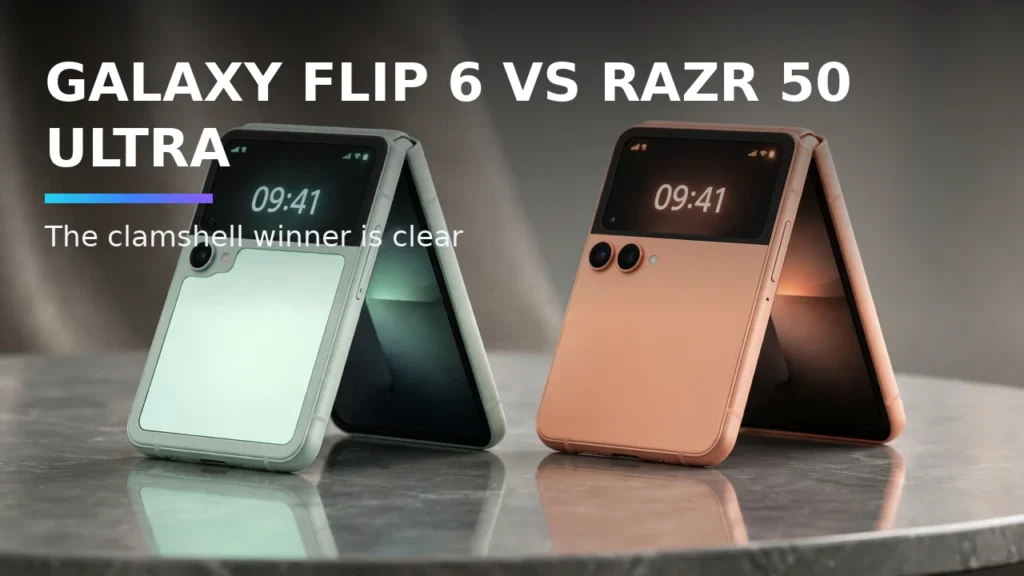
Clamshell foldable phones have matured from fragile early-adopter novelties into mainstream pocketable powerhouses. Instead of carrying a massive glass slab that juts out of your jeans pocket, modern flip phones fold into a compact square that lets you triage notifications, snap hands-free group selfies, and check maps from an exterior cover display. In the battle for clamshell supremacy, two devices dominate the conversation: Samsung's refined, armor-clad Galaxy Z Flip 6 and Motorola's bold, edge-to-edge Razr 50 Ultra (sold in North America as the Razr+).
In this complete 2026 editorial guide—built to help you Galaxy Z Flip 6 vs Razr 50 Ultra while covering essential details on flip phone comparison 2026, cover screen utility battle, and foldable hinge durability test—we break down the exact setup steps, hardware comparisons, and troubleshooting fixes based on specs, expert reviews and user feedback.
2026 Comparison Table: Specs, Features & Real-World Performance
Specification & Feature | Samsung Galaxy Z Flip 6 | Motorola Razr 50 Ultra (Razr+) | Category Winner |
Cover Display Size & Refresh | 3.4-inch Super AMOLED, 60Hz (Folder shape) | 4.0-inch LTPO pOLED, 165Hz (Edge-to-edge) | Motorola Razr 50 Ultra (Vastly superior screen) |
Cover Screen App Support | Requires Good Lock MultiStar for full apps | Runs any Android app natively out of the box | Motorola Razr 50 Ultra (Seamless software) |
Main Processor & Cooling | Snapdragon 8 Gen 3 for Galaxy + Vapor Chamber | Snapdragon 8s Gen 3 | Galaxy Z Flip 6 (Faster sustained performance) |
Dust & Water Ingress Rating | IP48 (Dust resistant >1mm + 1.5m water submersion) | IPX8 (Water submersion only; no official dust rating) | Galaxy Z Flip 6 (Superior hinge grit protection) |
Rear Camera Array | 50MP Main (OIS) + 12MP Ultrawide | 50MP Main (OIS) + 50MP 2x Telephoto Portrait | Tie (Flip 6 for ultrawide; Razr for portraits) |
OS Update Commitment | 7 years of Android OS & security updates | 3–4 years of OS updates | Galaxy Z Flip 6 (Long-term longevity) |
1. The Cover Screen Showdown: 4.0-Inch 165Hz Canvas vs 3.4-Inch Widget Window
The moment you pick up both phones while folded shut, Motorola's hardware advantage is unmistakable. The Razr 50 Ultra features a gorgeous 4.0-inch LTPO pOLED cover display that wraps completely around the dual camera lenses, running at a silky-smooth 165Hz refresh rate. More importantly, Motorola lets you open any installed Android app—Google Maps, Gmail, YouTube, Spotify, or WhatsApp—directly on the outer screen with a simple tap. By contrast, Samsung's 3.4-inch 60Hz cover screen defaults to curated widgets, requiring you to download the Good Lock app and configure the MultiStar module just to launch regular apps on the outside.
2. Hinge Engineering, Crease Visibility, and IP48 Dust Durability
While Motorola wins the cover screen beauty contest, Samsung strikes back with industrial-grade mechanical durability. The Galaxy Z Flip 6 features a dual-rail Armor Aluminum hinge with an official IP48 rating, offering certified protection against solid particles larger than 1 millimeter alongside full water submersion. For users who take their phone to the beach or work in dusty environments, Samsung's flat, boxy chassis and tighter hinge tolerances inspire greater long-term confidence, though Motorola's teardrop hinge still maintains a slightly shallower tactile crease down the center of the inner 6.9-inch display.
Real-World Compatibility Notes and Daily Usage Tips
3. Camera Versatility: Ultrawide Landscapes vs 2x Optical Telephoto
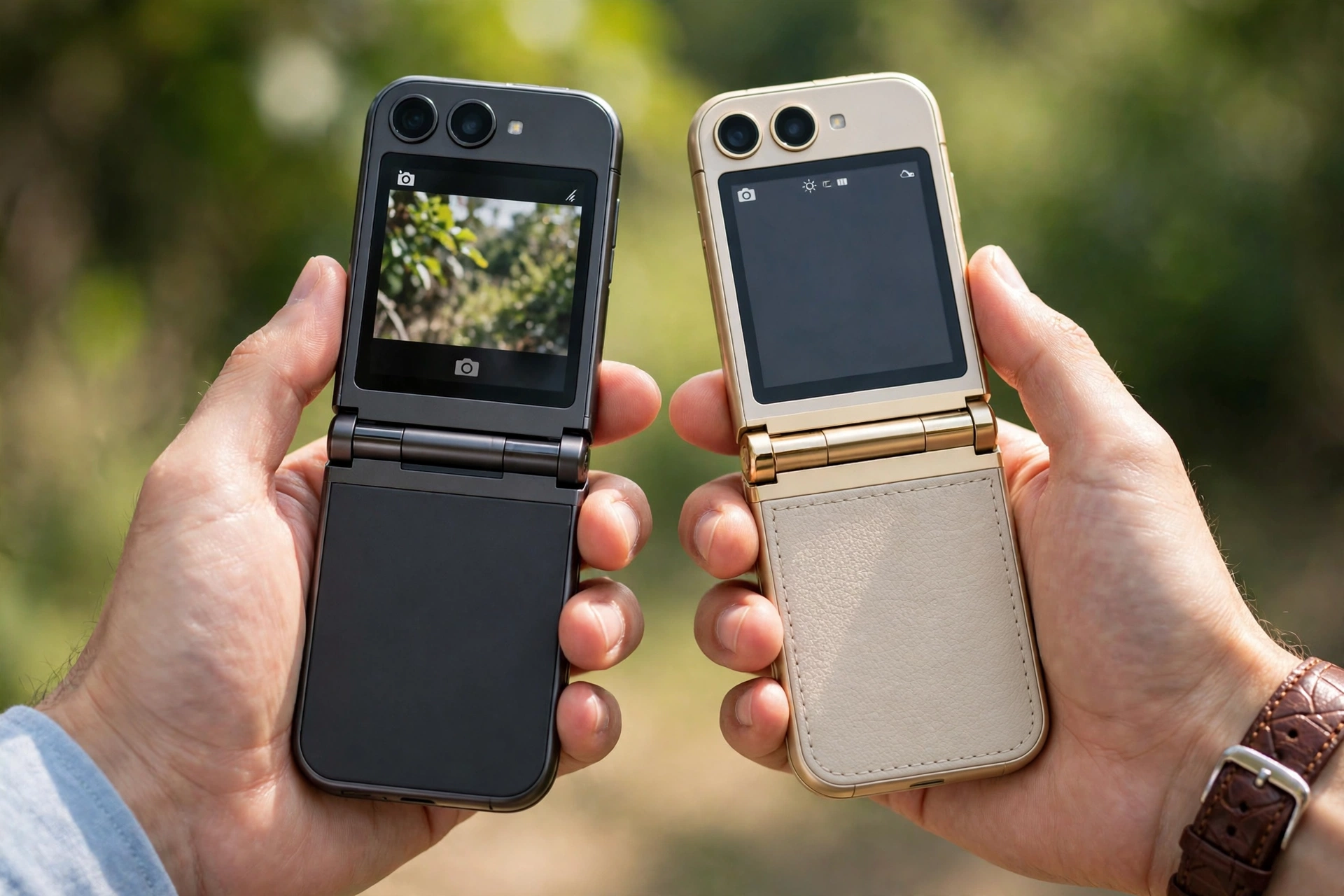
Samsung and Motorola made opposite optical choices for their secondary rear camera lens. The Galaxy Z Flip 6 pairs its upgraded 50MP primary sensor (inherited from the Galaxy S24) with a 12MP ultrawide lens—ideal for fitting large friend groups into a folded tabletop FlexCam shot or capturing wide architectural landscapes. Motorola ditched the ultrawide lens entirely in favor of a 50MP 2x optical telephoto sensor, which produces noticeably flatter, more flattering focal lengths for human portrait photography.
4. Performance, Vapor Chamber Cooling, and 7-Year Software Support
Under the hood, Samsung equipped the Z Flip 6 with the full flagship Snapdragon 8 Gen 3 processor paired—for the very first time in a Flip phone—with a physical copper vapor chamber cooling system. Motorola opted for the slightly stepped-down Snapdragon 8s Gen 3. Combined with Samsung's industry-leading commitment to seven full years of Android OS upgrades and security patches, the Z Flip 6 is built to last through the end of the decade.
3. Resetting Bluetooth, Network, or App Cache Safely

Pro Tips for Getting the Most Out of Your Android Setup
- Create Quick Settings Tiles: Edit your swipe-down Quick Settings panel to place frequently used toggles—like Spatial Audio, Hotspot, or Screen Record—in the top four slots for one-handed reachability.
- Test Setups Before You Need Them: Whether configuring offline Find My Device tracking, Notification History, or off-grid mesh messaging, run a two-minute live test at home so you know the workflow works before an actual emergency happens.
- Keep Local Backups of Open-Source Apps: Export your settings and databases periodically to a local folder or encrypted drive so upgrading to a new phone takes minutes instead of hours.
Conclusion
Mastering how to Galaxy Z Flip 6 vs Razr 50 Ultra gives you a smarter, more resilient, and more enjoyable Android experience every single day. Whether you are protecting your hardware against loss, upgrading to clean open-source utilities, or dialing in your wireless audio and display setup, applying the verified steps in this guide ensures your phone works the way you want in 2026.