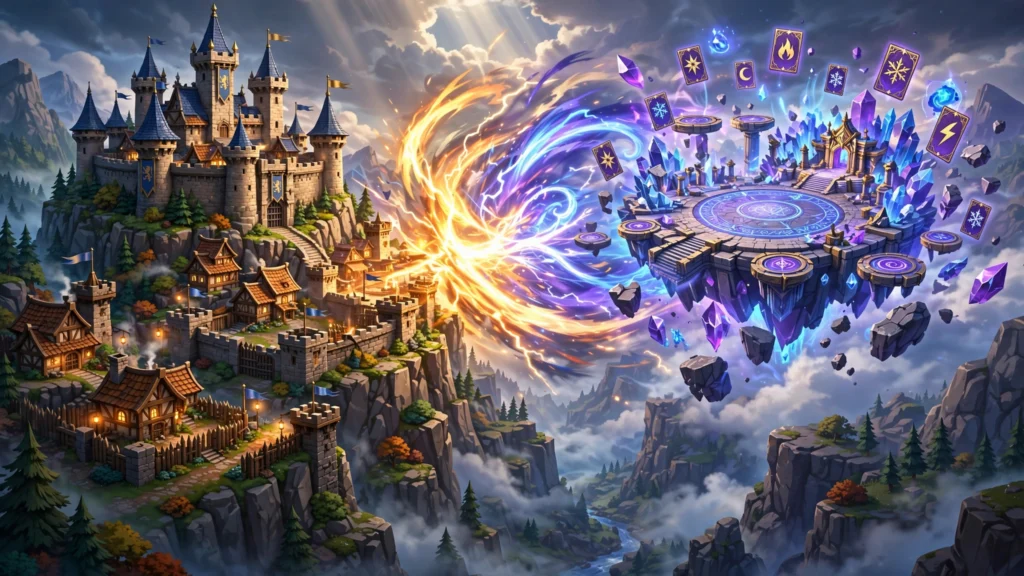
Supercell has achieved something rare in the mobile gaming industry: creating two distinct titles that dominate the charts simultaneously while sharing the same universe. For the uninitiated, Clash of Clans vs Clash Royale might seem like a choice between two flavors of the same ice cream. After all, they share the same Barbarians, Archers, and Hog Riders. However, beyond the aesthetic veneer lies a fundamental divergence in gameplay philosophy, time management, and psychological engagement.
Choosing between these two giants isn’t about which game is objectively “better.” Instead, it is about which game fits your specific lifestyle. One is a digital garden that requires patience and long-term planning; the other is a high-speed arena that demands instant reflexes and tactical adaptability. If you are struggling to decide where to invest your time—and potentially your money—understanding the structural differences is essential. This analysis breaks down the six deciding factors that define the experience of each game, busting the myth that they are interchangeable experiences for the casual mobile gamer.
1. The Reality of Daily Time Commitment
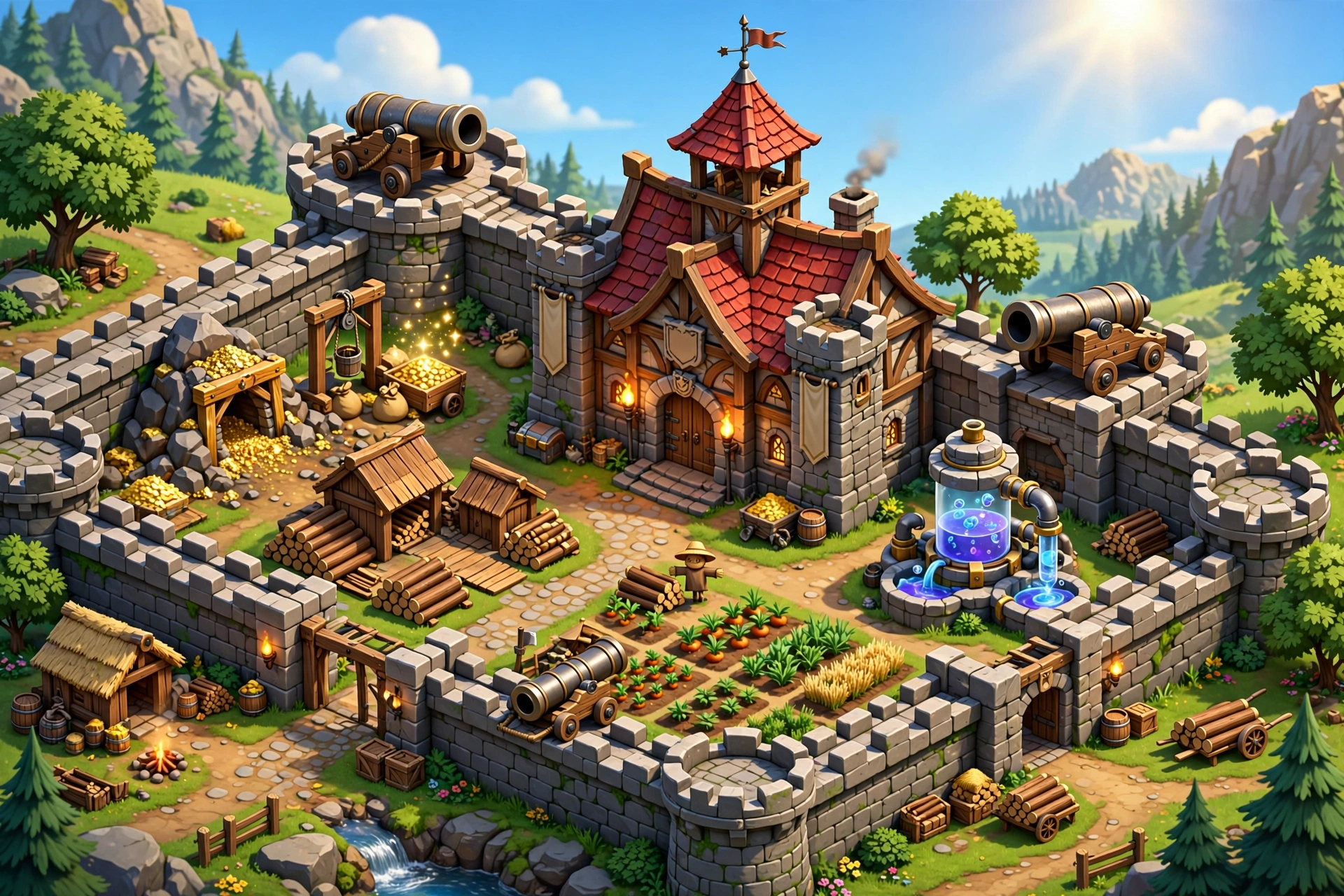
The most pervasive myth in the mobile gaming community is that strategy games inherently require hours of sitting still. While both games can be played for hours, their “maintenance floor”—the minimum time required to stay relevant—is vastly different. In Clash of Clans, the daily commitment is often dictated by your shield status and upgrade timers. A player can effectively maintain progress by logging in for five minutes, three times a day, to collect resources and start a new upgrade. It is a game of “check-ins.”
Clash Royale, conversely, operates on a “chest cycle” and “trophy push” logic. To keep your progression moving, you must actively win matches to fill chest slots. Since a match lasts roughly three to five minutes, and you may not win every game, the time commitment to simply keep your rewards flowing is often higher than in its predecessor. If you have a busy work schedule where you can only peek at your phone for sixty seconds, the village management of Clash of Clans is far more forgiving than the high-stakes, unpausable nature of a Royale ladder match.
the mental energy required differs significantly. Clash of Clans allows for “passive” play—you can plan an attack while distracted. Clash Royale requires 100% focus for the duration of the match. Missing a single tile placement for a Tornado or a Fireball can result in a loss, making it a poor choice for those who play in environments with frequent interruptions.
2. Session Structure: Long-Term Planning vs. Instant Action
The core loop of Clash of Clans is built around the concept of “delayed gratification.” You spend days, or even weeks at higher Town Hall levels, waiting for a single building to finish. The satisfaction comes from the macro-management of your base layout and the long-term accumulation of wealth. It is a game for the architect and the strategist who enjoys seeing a plan come together over months of steady effort.
Clash Royale is the antithesis of this. It provides the “instant hit” of competitive play. There are no timers on your units; if you want to play fifty matches in a row, you can. The session structure is defined by the three-minute timer. This makes it ideal for the “commuter” lifestyle or the student looking for a quick break between classes. You aren’t waiting for a building to finish; you are waiting for the next opponent. This shift from “builder” to “fighter” changes how the game feels in your pocket.
For players who find themselves browsing the best Android games for strategy, the distinction is clear: do you want to build an empire, or do you want to win a duel? The session structure of Clans encourages a “set it and forget it” mentality, whereas Royale encourages “just one more game” loops that can easily turn a five-minute break into an hour of ladder climbing.
| Feature | Clash of Clans | Clash Royale |
|---|---|---|
| Primary Gameplay | Base Building & Tactical Raiding | Real-time Card Combat (Tower Defense) |
| Average Session | 2–10 Minutes (Management) | 3–5 Minutes (Active Combat) |
| Win Condition | Resource Accumulation / Clan War Stars | Tower Destruction / Trophy Gain |
| Offline Progress | High (Buildings finish while away) | Low (Only Chest unlocking) |
3. Progression Pace and the “Grind”
Progression in Clash of Clans is linear and predictable. You know exactly how much gold a wall costs and exactly how long a hidden tesla takes to reach level 10. The “grind” here is about resource farming. You attack other players to steal their loot. While it can be repetitive, it is rarely frustrating because you are almost always making forward progress, even if it is slow. The introduction of the Magic Items and the Season Pass has significantly accelerated this pace compared to the game’s early years.
Clash Royale’s progression is tied to a card-leveling system that can feel significantly more “grindy” and punishing. To level up a specific deck, you need to collect hundreds or thousands of specific cards and the gold to upgrade them. Because the game is strictly PvP (Player vs. Player), being “under-leveled” is a massive disadvantage. In Clash of Clans, a lower-level player can still find suitable targets to raid. In Clash Royale, if your cards are level 12 and your opponent’s are level 14, you are fighting an uphill battle that skill alone might not overcome.
This creates a different kind of pressure. The “grind” in Royale is often a quest for “meta” relevance. As the game balances cards, your favorite deck might become weak, forcing you to start the progression grind over with a new set of cards. Clans is more stable; once a building is upgraded, it stays upgraded forever, and its value rarely diminishes entirely.
4. Competitive Depth: Macro vs. Micro
When we talk about competitive depth, we are looking at where the skill ceiling sits. In Clash of Clans, the skill is “Macro.” It is about army composition, pathfinding AI, and spell placement. You have a long time to scout a base during a Clan War and plan your entry point. The complexity lies in the sheer number of variables—how will the Queen walk? Where are the giant bombs? It is a puzzle-solving exercise where the puzzle is designed by another human.
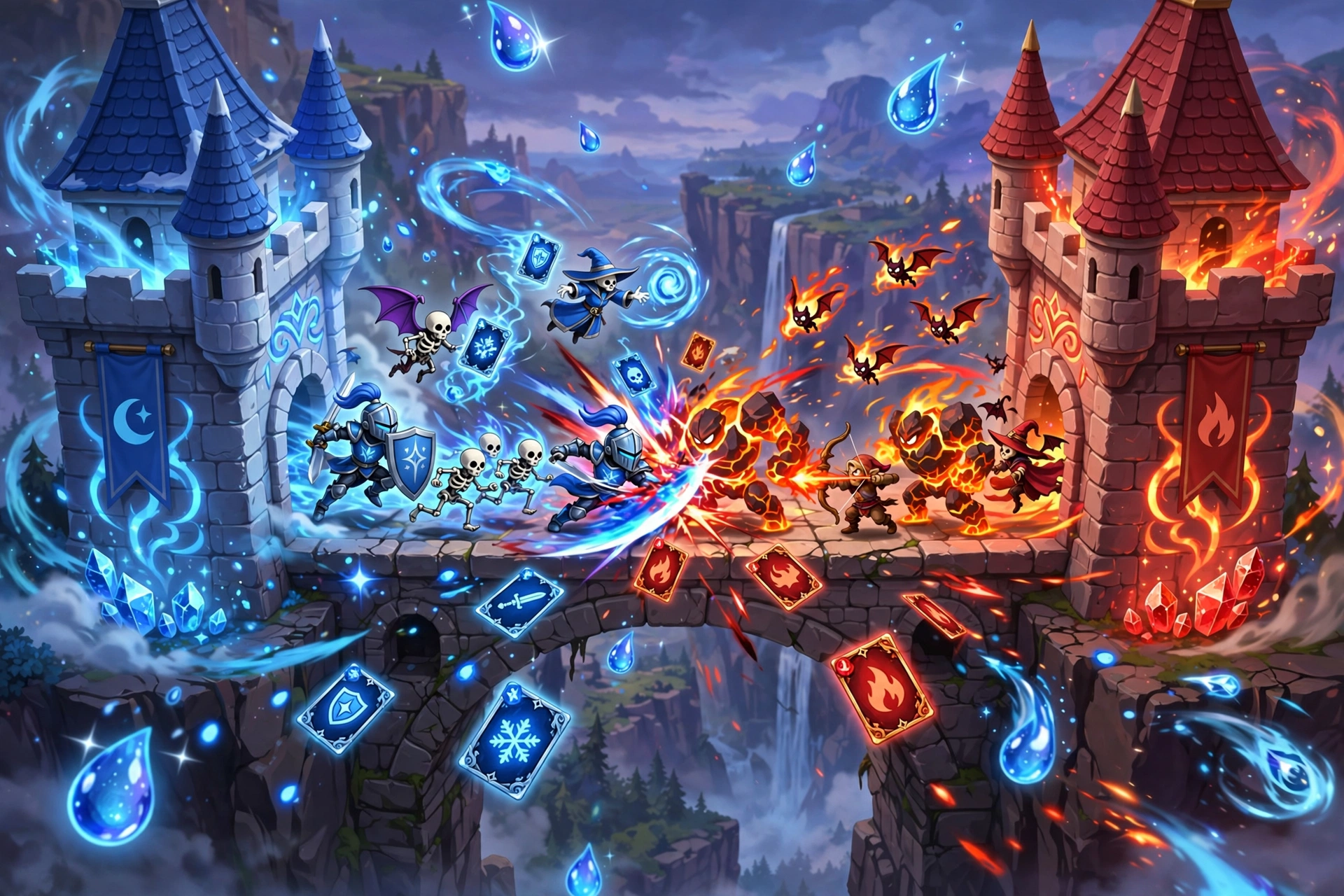
Clash Royale’s depth is “Micro.” It is about elixir management, card counting, and precise placement. You have to keep track of which cards your opponent has played so you know when their “counter” is out of rotation. It requires “split-second” decision-making. If you drop your Electro Wizard half a second too late, the Sparky fires, and your tower is gone. This makes Royale a much more “eSports” ready title, but it also makes it significantly more stressful for the average user.
For those interested in the technical side of mobile gaming, looking into how to optimize Android for gaming is often more relevant for Royale players, where frame drops or input lag can literally end a win streak. In Clans, a slight lag spike during a deployment is rarely as catastrophic.
5. Social and Clan Dynamics
The “Clash” in both titles refers to the Clan system, but the social dynamics are night and day. In Clash of Clans, the Clan is the backbone of the experience. Clan Wars and the Clan War Leagues are massive, multi-day events that require coordination, communication, and shared strategy. There is a sense of “neighborhood” in a good Clan. You donate troops, give advice on base layouts, and work together toward a collective goal. The social bond is often what keeps players logged in for years.
In Clash Royale, the Clan experience feels more transactional. You join a clan primarily to request cards and participate in Clan Wars 2.0, which are mostly individual battles that contribute to a group score. While there is a chat and a sense of community, the game is fundamentally a solo endeavor. You are the one on the bridge; your clanmates are just the cheering section. If you prefer a “team sport” feel, Clans is the superior choice. If you prefer being a “lone wolf” who occasionally trades resources with others, Royale fits that mold.
6. Monetization Pressure and “Pay to Win”
No discussion of Supercell games is complete without addressing the “freemium” model. Both games are free to download but offer significant advantages to paying players. However, the *feeling* of that monetization is different. In Clash of Clans, paying (usually through the Gold Pass) acts as a “time skip.” You are paying to reach the end-game faster. Because the primary game mode is attacking AI-defended bases or participating in matched Clan Wars, a paying player’s progress doesn’t usually ruin a free player’s afternoon.
In Clash Royale, the monetization pressure is more “in your face.” Because you are constantly matched against live opponents, you will frequently encounter “whales”—players who have spent significant money to max out their card levels. This creates a “pay-to-compete” wall at certain trophy levels. While Supercell has introduced “Level Caps” in certain tournament modes to alleviate this, the main ladder remains a place where your wallet can be as important as your deck-building skills. This makes Royale a more frustrating experience for “Free-to-Play” (F2P) purists compared to the more insulated progression of Clans.
| Lifestyle Fit | Recommended Game | Reasoning |
|---|---|---|
| Busy Professional | Clash of Clans | Short, non-consecutive sessions; progress happens while offline. |
| Competitive Student | Clash Royale | High-skill ceiling; quick matches between tasks; active PvP. |
| Social Gamer | Clash of Clans | Deep clan integration and cooperative war mechanics. |
| Adrenaline Junkie | Clash Royale | Real-time stakes and instant feedback loops. |

The Verdict: Which One Should You Install?
The choice between Clash of Clans vs Clash Royale ultimately comes down to your “lifestyle profile.” After years of community feedback and observing the evolution of both games, the recommendations are clear:
- The Busy Adult: Choose Clash of Clans. It respects your time. You can go days without a “hard” play session and still feel like your village is growing. It is a low-stress hobby that rewards patience over reflexes.
- The Competitive Grinder: Choose Clash Royale. If you want to test your mettle against other humans and enjoy the “climb,” the ladder system is addictive. It provides a rush that a base-building game simply cannot replicate.
- The Social Strategist: Choose Clash of Clans. The depth of the Clan War system provides a sense of belonging and collective achievement that is rare in mobile gaming.
- The Casual Commuter: Choose Clash Royale. The three-minute match is the perfect length for a subway ride or a waiting room. You get a complete “story” (the match) in a very short window.
It is also worth noting that many players find a “hybrid” approach works best—using Clash of Clans as their primary “slow” game and keeping Clash Royale installed for when they need a quick competitive fix. Both games are masterpieces of mobile design, but they serve very different psychological needs.
Frequently Asked Questions
Is Clash of Clans or Clash Royale harder for new players to start in 2025?
Clash of Clans is generally easier for new players to pick up today. Supercell has implemented numerous “catch-up” mechanics, such as reduced upgrade times and massive resource injections for lower Town Hall levels. You can reach a competitive mid-game state within a few months of consistent play. Clash Royale can be more daunting because the card-collection pool is now massive, and new players often face “gatekeeper” players with higher-level cards in the mid-ladder trophies, making the initial climb feel more restrictive and punishing for those who don’t want to spend money on card chests.
Can you play Clash Royale successfully without spending any money?
Yes, but it requires extreme discipline. To succeed as a Free-to-Play (F2P) player in Clash Royale, you must focus on leveling up exactly one “meta-resistant” deck (like Hog Cycle or Log Bait) and ignore the urge to upgrade every card you get. By focusing all your gold and Wild Cards on eight specific cards, you can eventually compete at high levels. However, you will be at a disadvantage whenever the game’s balance changes, as you won’t have the resources to quickly pivot to a new deck, unlike paying players who have maxed out their entire collections.
Does Clash of Clans require an internet connection for the building part?
Yes, Clash of Clans is an “always-online” game. Even though your buildings continue to upgrade while you are away, you cannot access your village, collect resources, or start new projects without a stable internet connection. All game data is stored on Supercell’s servers to prevent cheating and to allow other players to raid your base while you are offline. If you are looking for a game to play in “Airplane Mode,” neither of these titles will work, as both rely heavily on real-time server synchronization for their core mechanics.
Which game has a better “End Game” experience?
This is subjective. The Clash of Clans end-game revolves around “Legend League” and high-level Clan War Leagues, where the margin for error in attacks is razor-thin. It is about perfecting 3-star strategies against the toughest bases in the world. The Clash Royale end-game is the “Path of Legends,” a ranked ladder with specific “leagues.” The end-game in Royale is much more about the global leaderboard and qualifying for official tournaments. If you enjoy “mastery of a craft,” Clans is better. If you enjoy “dominance over an opponent,” Royale wins.
Are the two games connected in any way besides the characters?
Mechanically, no. Your progress in Clash of Clans does not affect your progress in Clash Royale, and vice versa. They are entirely separate apps with separate economies. The only connection is through your “Supercell ID,” which allows you to see friends who play both games and occasionally earn “cross-game” cosmetic rewards during special anniversary events. The lore is shared—meaning a “Log” in Royale is the same “Log” mentioned in Clans—but you don’t need to play one to understand or succeed in the other.
Conclusion
The battle of Clash of Clans vs Clash Royale isn’t a fight for supremacy, but a lesson in diverse game design. One rewards the “marathon” mindset, while the other celebrates the “sprint.” By understanding your own daily routine and your tolerance for competitive stress, you can choose the title that will provide years of entertainment rather than a week of frustration. Whether you are building walls or storming towers, the “Clash” universe offers a premium experience that remains the gold standard for mobile strategy.