


Motorola’s new flagship is getting a set of Google Gemini features that, until now, have been closely tied to Pixel and Samsung phones. The Motorola Signature 27 gains Create My Widget, new Gboard tools including Sign-to-Text, and Gemini task automation, according to reporting from 9to5Google. Pre-orders for the phone have opened in the United States at $1,599, with the launch set for November 19, 2026. For Android buyers, the news is less about one phone and more about a shift in how Google’s smartest features are shared. Capabilities that once helped sell a Pixel are now arriving on a Motorola flagship at launch.
That matters because the Signature 27 is Motorola’s attempt to compete at the very top of the Android market, where the price alone puts it against the best phones Google and Samsung sell. A $1,599 phone needs a clear reason to exist, and Motorola is betting that Gemini intelligence, delivered across the system rather than locked inside a single app, is part of that reason. The features themselves are practical rather than flashy: a widget you describe in words, a keyboard that can turn sign language video into text, and an assistant that can carry out multi-step tasks. Each one is aimed at saving time, and each one raises a fair question for buyers — do these features work well enough on a Motorola phone to matter?
What Motorola Announced
The headline is straightforward. The Motorola Signature 27, the company’s new flagship, will ship with Google Gemini Intelligence features that were previously tied to Pixel and Samsung hardware. The features named in the reporting are Create My Widget, Gboard tools, and Gemini task automation. Pre-orders opened in the US at $1,599, and the phone launches on November 19, 2026. That timing puts the Signature 27 in stores before the holiday season, when many buyers are choosing a phone they will keep for two or three years. It also means the first real tests of these features on Motorola hardware will come quickly, from reviewers and early buyers rather than from marketing material.
The price deserves attention. At $1,599, the Signature 27 is not a mid-range phone with a few AI extras. It is priced as a true flagship, and it will be judged as one. Buyers at that price expect a strong camera, a good display, long battery life, and software support that lasts. Motorola has not, in the facts available here, confirmed the full specification list for this article, so this piece does not invent or repeat unconfirmed hardware details. What is confirmed is the software story: Gemini features that used to be a reason to buy a Pixel or a Samsung Galaxy are now a reason to consider a Motorola. That is a meaningful change in the Android market, even before a single review is published.
Create My Widget: Describe It, Get a Working Widget
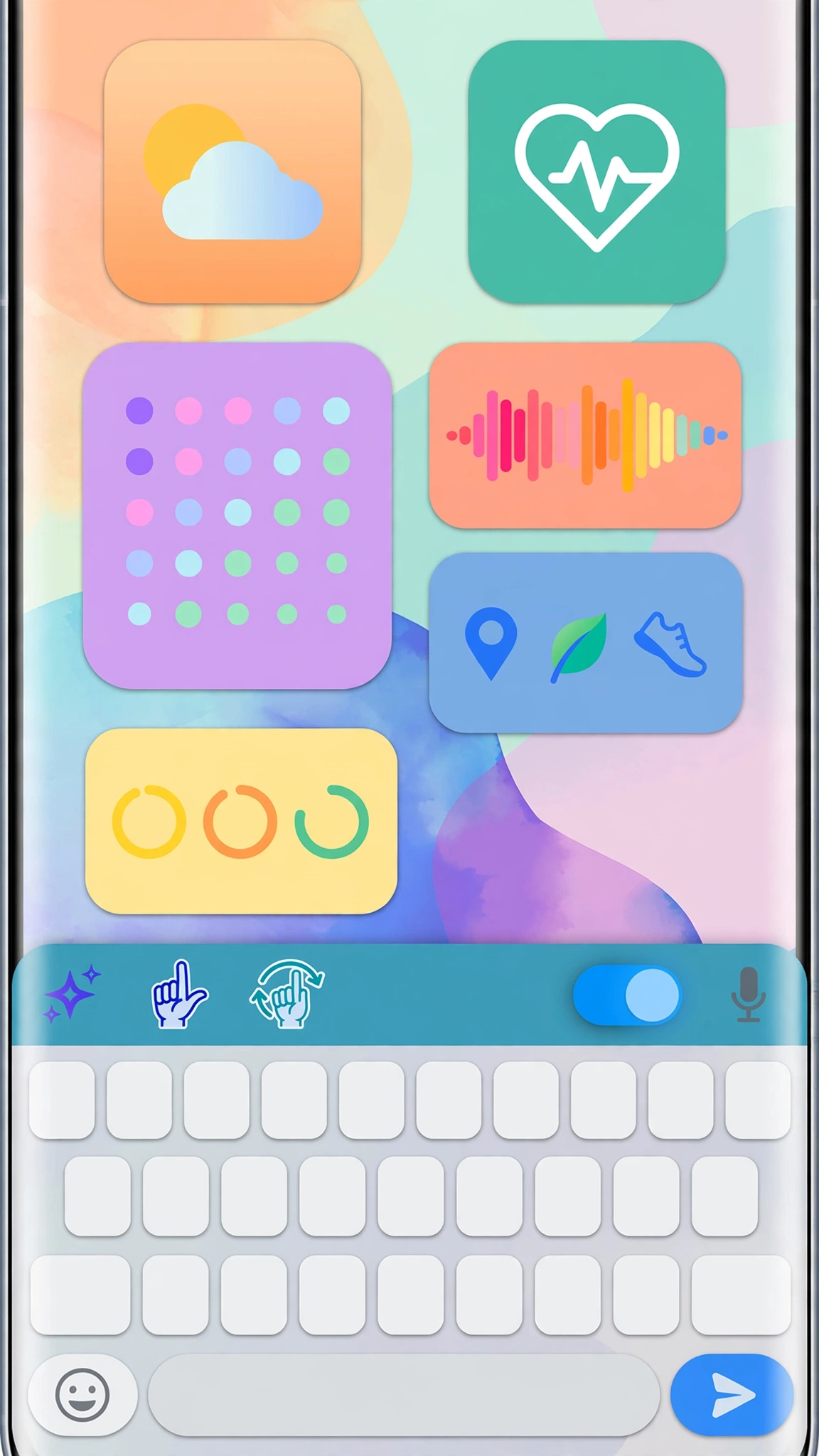
Create My Widget is the most eye-catching of the new features. The idea is simple: describe the widget you want in plain language, and Gemini generates a functional version for your home screen. Instead of choosing from a fixed list of widgets that app developers have already built, you describe what you need — a widget that shows your next calendar event with a travel time, or a compact view of a task list, or a glanceable summary of information you check every day — and the system builds it. Google announced Create My Widget earlier in 2026, and its arrival on the Signature 27 shows that Google is now treating it as a feature for the wider Android ecosystem, not only for its own phones.
For everyday use, the value of a tool like this depends on two things: how well it understands a request, and how useful the result is. A widget that looks right but shows the wrong data is worse than no widget at all, because it creates a false sense of confidence. A widget that needs to be rebuilt three times before it works is not saving time. The honest test will be whether ordinary descriptions produce reliable widgets on the first try, whether the widgets stay up to date, and whether they respect battery and data limits. Those are questions only hands-on testing after November 19 can answer. Until then, Create My Widget should be read as a promising idea with a clear purpose: let people shape their home screen around their own routines instead of fitting their routines around a fixed set of widgets.
Gboard Tools: Sign-to-Text and Rambler
The Gboard additions are the most human part of this update. Gboard Sign-to-Text translates American Sign Language video into English text. A person can sign on camera, and the keyboard turns that signing into written words. That is a genuine accessibility feature, not a convenience extra. It gives people who use American Sign Language a faster way to write messages, emails, and notes on a phone, without typing letter by letter or relying on another person to interpret. It also matters for the people they communicate with, because it lowers the barrier to everyday conversation across a language gap that phones have mostly ignored.
As with any accessibility tool, the details will decide how useful it is in practice. Accuracy matters most: a translation tool that misreads signs will frustrate the people it is meant to help. Speed matters too, because a conversation that pauses for several seconds after each sentence is hard to sustain. Privacy matters as well, since the feature uses video of a person’s hands and face. Google and Motorola have not, in the facts available here, confirmed the processing details for this feature on the Signature 27, so buyers should look for hands-on reports after launch that test accuracy in real conditions, including different lighting, signing speeds, and everyday settings. The promise is clear and important. The proof will come from people who use American Sign Language every day.
Gboard Rambler is also included, though less detail is available about it in the reporting used for this article. Its inclusion alongside Sign-to-Text suggests Google is treating Gboard as a place for Gemini to help with writing and communication more broadly, not only with typing and autocorrect. Readers should treat any specific description of Rambler beyond its inclusion as unconfirmed until Google or Motorola explains it in detail. What is confirmed is that the Signature 27 will ship with these Gboard tools as part of its Gemini feature set, and that they arrive together as a package rather than as separate downloads.
Gemini Task Automation
Gemini task automation is the third part of the package, and it is the one most likely to change how the phone feels day to day. Task automation means Gemini can carry out multi-step jobs on your behalf, rather than only answering a single question or performing a single action. In general terms, that can mean chaining steps together: gathering information, drafting a message, setting a reminder, or preparing a summary across apps. The reporting confirms that Gemini task automation is also available on Pixel and select Samsung Galaxy devices, which puts the Signature 27 in the same group as the two brands that have defined Android AI so far.
The value of automation depends on trust. People will only hand multi-step tasks to an assistant if it does the steps correctly, tells them what it did, and lets them undo a mistake. A system that books, sends, or deletes without clear confirmation will be turned off quickly. A system that asks for approval at each step may be safer but slower. The balance between speed and control is the central design question for task automation, and it is one that Google, Samsung, and now Motorola all have to answer. Buyers should watch early reviews for how the Signature 27 handles that balance: does it show its work, does it confirm before acting, and does it make it easy to correct an error? Those behaviors matter more than the number of tasks it can perform.
Why Gemini Spreading Beyond Pixel Matters
For several years, the pattern in Android has been clear. Google builds a new AI feature, it appears first on Pixel phones, and it reaches other brands months later, if at all. That pattern made sense as a way to sell Pixel phones, but it slowed the spread of useful features across Android as a whole. The Signature 27 breaks that pattern in a visible way. Gemini features that were previously tied to Pixel and Samsung hardware are arriving on a Motorola flagship at launch, on the same day the phone goes on sale. That suggests Google now sees wider distribution as more valuable than exclusivity, at least for these features.
There are good reasons for that shift. Android’s strength has always been choice: many brands, many prices, many designs, all running the same platform. If the best AI features only work on two brands, that choice becomes less meaningful, and buyers who prefer Motorola, OnePlus, or another brand are left with a weaker version of Android. Spreading Gemini features more widely makes the whole platform stronger, and it gives Google more users feeding back into its models. It also puts pressure on every Android maker to compete on implementation rather than on access. The question is no longer which brand gets the feature, but which brand makes it work best on its own hardware.
For buyers, this shift changes how to shop. A year ago, a buyer who wanted the latest Gemini features had a short list: a Pixel, or a recent Samsung Galaxy. Now that list is longer, and the Signature 27 is the newest name on it. That does not mean every Android phone will get every Gemini feature. It does mean that exclusivity is no longer the safe assumption it once was. Buyers should still check the specific features on the specific model they are considering, because availability varies by device and by region, but the direction is clear: Gemini is becoming an Android feature, not only a Pixel feature.
What This Means for Samsung and Pixel Buyers
The arrival of these features on Motorola does not make Pixel or Samsung phones less capable. Gemini task automation is already on Pixel and select Samsung Galaxy devices, and both brands will continue to get new features, often first. What changes is the competitive pressure. If a Motorola flagship can offer the same Gemini tools at launch, Pixel and Samsung have to compete on other strengths: camera quality, update policy, ecosystem, design, and price. That is healthy for buyers. It also means that the choice between brands is less about who has a single feature and more about the whole package. A buyer who loves Pixel’s camera or Samsung’s display still has good reasons to choose those phones. A buyer who prefers Motorola’s design or software now has fewer reasons to feel they are giving up AI capability to do so.
| Feature | What it does | Availability confirmed here |
|---|---|---|
| Create My Widget | Describe the widget you want and Gemini generates a functional version | Motorola Signature 27; Google announced it earlier in 2026 |
| Gboard Sign-to-Text | Translates American Sign Language video into English text | Motorola Signature 27, as part of Gboard tools |
| Gboard Rambler | Included Gboard tool; details beyond inclusion not confirmed here | Motorola Signature 27 |
| Gemini task automation | Carries out multi-step tasks across apps on your behalf | Signature 27; also Pixel and select Samsung Galaxy devices |
| Brand | Gemini features in this story | What still sets it apart |
|---|---|---|
| Motorola Signature 27 | Create My Widget, Gboard tools, Gemini task automation at launch | New flagship entrant; $1,599; launches Nov 19, 2026; Motorola design and software |
| Google Pixel | Gemini task automation; usually first to receive new Gemini features | First access to new Google AI; Google’s own hardware and software integration |
| Samsung Galaxy (select models) | Gemini task automation on select Galaxy devices | Large ecosystem, display and camera strengths; Galaxy AI alongside Gemini |
Who Should Care, and Who Should Wait
The Signature 27 will matter most to three groups. First, Motorola owners and fans who have waited for a true flagship from the brand will finally have one that does not ask them to give up current Gemini features. Second, Android buyers who want Gemini tools but prefer Motorola’s design or software now have a credible option at the top of the market. Third, anyone who relies on accessibility features — especially people who use American Sign Language — should pay close attention to Sign-to-Text, because a well-built version of that tool could change daily communication in a real way. For those buyers, the November 19 launch is worth watching closely.
Other buyers should wait. At $1,599, the Signature 27 is a major purchase, and no one should pre-order it on the strength of AI features alone. The right move is to wait for hands-on reviews that test Create My Widget with ordinary requests, test Sign-to-Text with real signers, and test task automation with everyday jobs. A phone is a two- or three-year commitment. A few weeks of patience before buying is a small price for a clearer picture of what the phone actually does well.
What Remains to Test at Launch
When the Signature 27 reaches reviewers on November 19, 2026, the most useful tests will be practical ones. For Create My Widget, testers should try vague descriptions, specific descriptions, and requests that involve live data, and report how often the first result is usable. For Sign-to-Text, testers should work with people who use American Sign Language daily, in normal lighting and at normal speed, and report accuracy honestly. For task automation, testers should try multi-step jobs that involve more than one app, and report whether the phone shows its work, asks for confirmation, and allows easy correction when it gets a step wrong.
Beyond the Gemini features, buyers will want answers to the questions that apply to any $1,599 phone: how long the battery lasts in real use, how good the cameras are in low light, how the display looks outdoors, how long software updates will continue, and how the phone feels after a week of daily use. None of those answers are available in the reporting used here, and this article does not guess at them. The launch date is close, and the first wave of testing will fill those gaps quickly. Until then, the fair summary is that Motorola has announced a strong software story for its new flagship, and the hardware story still needs to be proven in the hands of reviewers and buyers.
Frequently Asked Questions
What is the Motorola Signature 27?
It is Motorola’s new flagship phone. Pre-orders opened in the US at $1,599, and it launches on November 19, 2026. It gains Google Gemini Intelligence features previously tied to Pixel and Samsung hardware.
What is Create My Widget?
Create My Widget lets you describe the widget you want in plain language, and Gemini generates a functional version for your home screen. Google announced it earlier in 2026. It is now included on the Signature 27.
What does Gboard Sign-to-Text do?
Gboard Sign-to-Text translates American Sign Language video into English text. It is an accessibility feature that lets people who use American Sign Language write messages and notes more quickly on their phone. Gboard Rambler is also included.
Is Gemini task automation only on Motorola?
No. Gemini task automation is also on Pixel and select Samsung Galaxy devices. Its arrival on the Signature 27 means Motorola now offers it at launch alongside those brands.
Should I pre-order the Signature 27 for the Gemini features?
That is a personal decision, but at $1,599 it is worth waiting for hands-on reviews. The features sound useful, and their spread beyond Pixel is a real change for Android, but their quality on Motorola hardware still needs to be tested after the November 19 launch.
Verdict: A Real Shift for Android, With Testing Still to Do
The Motorola Signature 27 matters for a reason that goes beyond one phone. Gemini features that were once a reason to buy a Pixel or a Samsung are now launching on a Motorola flagship, at $1,599, on November 19, 2026. Create My Widget, Gboard Sign-to-Text, and Gemini task automation are practical tools, and their arrival on Motorola suggests Google is treating Gemini as an Android-wide platform rather than a Pixel-only advantage. The caution is equally clear: these features still need to be tested on Motorola hardware, in real conditions, by real users. Wait for those results before spending $1,599, and judge the Signature 27 on what it actually does, not only on what it promises.



What do you think?
Share your experience or ask a question. A useful conversation starts with you.
Join the discussion