The ultra-premium smartphone tier has converged toward algorithmic homogenization. Most flagship manufacturers have removed physical expansion hardware, abandoned analog audio interfaces, and prioritized automated computational post-processing that makes every photo look like it was pre-filtered for social media. However, two industrial titans continue to produce uncompromising hardware powerhouses tailored for discerning content creators, pro photographers, and technology purists: Samsung with the Galaxy S24 Ultra, and Sony with the Xperia 1 VI.
Comparing the Sony Xperia 1 VI vs Galaxy S24 Ultra represents an ideological clash between computational mainstream luxury and purist professional utility. While Samsung dominates consumer productivity with an integrated S Pen, revolutionary anti-reflective Gorilla Armor glass, and 7 years of software support, Sony continues to champion rare hardware heritage as the ultimate headphone jack flagship, offering an uncompressed 3.5mm analog audio DAC, expandable microSD storage up to 1.5 terabytes, a physical two-stage camera shutter button, and true continuous optical telephoto zoom. Choosing the ultimate device in this creator smartphone comparison requires an exhaustive evaluation of real-world Xperia telephoto zoom mechanics, pro video color profiles, battery endurance, and thermal stability. This comprehensive technical shootout benchmarks both pro flagships based on published specifications, lab audio/display measurements, and professional creator evaluations in 2026.
Regional Availability & Pricing Notice: Both creator flagships command ultra-premium prices exceeding $1,299. Sony Xperia 1 VI is officially distributed across European, British, and Asian markets, and can be imported to North America with broad T-Mobile network compatibility, though it lacks mmWave 5G hardware. Samsung Galaxy S24 Ultra enjoys universal global carrier certification. Verify live pricing and carrier bands on official vendor portals.
Design and Hardware Philosophy: Analog Craftsmanship vs Titanium Monolith
Holding these two devices immediately highlights their opposing design lineages:
Sony Xperia 1 VI: The Tactical Precision Tool
Sony made a historic design pivot with the Xperia 1 VI, abandoning its legacy ultra-narrow 21:9 aspect ratio in favor of an ergonomic, modern 19.5:9 display proportion. The chassis is a masterclass in functional industrial tactile design: the rear glass features a microscopic tactile dot pattern that provides extraordinary physical grip without requiring a case, while the aluminum frame is grooved with horizontal ribbed channels that prevent slipping during landscape handheld video shooting.
More importantly, Sony refuses to compromise on hardware features that other brands eliminated: it houses a gold-plated 3.5mm analog headphone jack with high-resolution audio processing, a tool-free SIM tray that pops open without a needle and houses a microSD expansion slot supporting up to 1.5 TB, and a dedicated, tactile two-stage physical camera shutter button that half-presses to focus and full-presses to capture, just like a Sony Alpha mirrorless camera.
Samsung Galaxy S24 Ultra: The Architectural Powerhouse
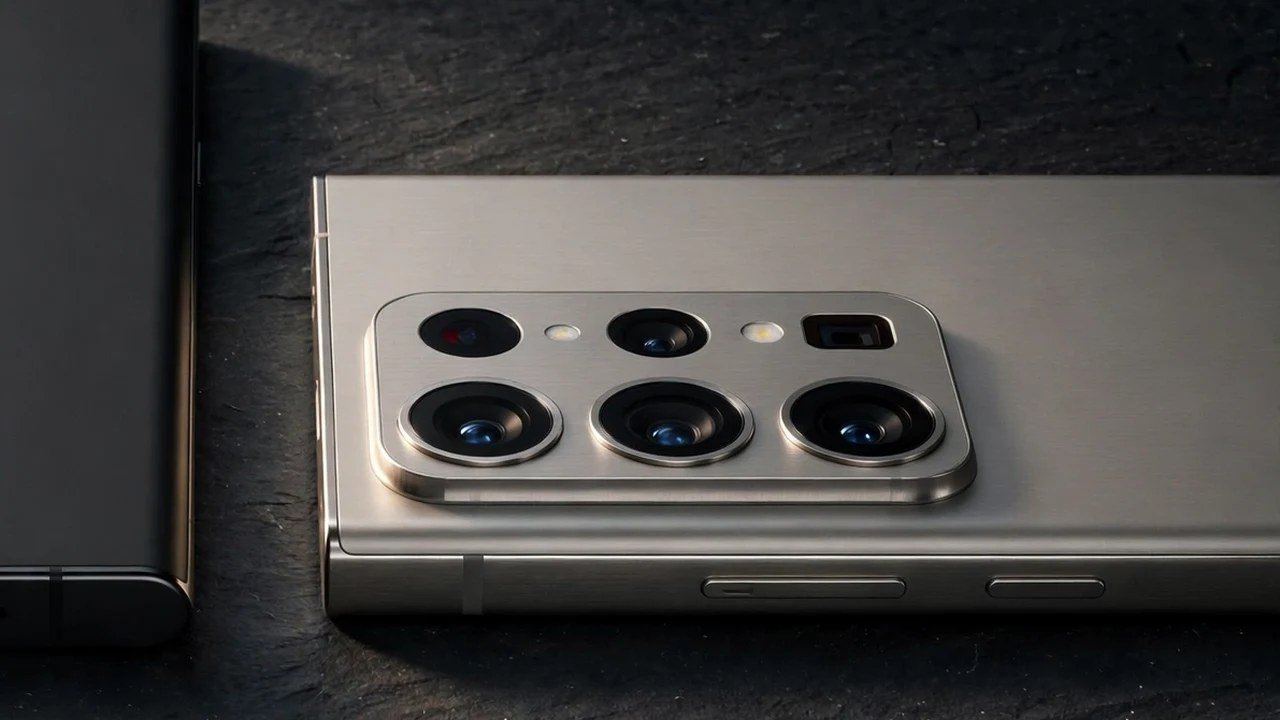
The Galaxy S24 Ultra exudes modern architectural authority. Sculpted with Grade 5 titanium rails, flat front and back glass, and sharp 90-degree corners, it commands attention. Its crowning hardware glory is the integrated S Pen stylus that docks seamlessly into the bottom chassis, allowing creators to sketch storyboards, edit video timelines with frame-by-frame precision, or trigger camera shutters remotely via Bluetooth. However, weighing 232 grams with wide shoulders, it is noticeably heavier and more cumbersome in the hand than the 192-gram Xperia.
Display Technology: Gorilla Armor Anti-Reflective vs Bravia LTPO
Both devices feature brilliant OLED displays, but emphasize different viewing priorities:
Samsung's Anti-Reflective Gorilla Armor Advantage
The Galaxy S24 Ultra features a 6.8-inch Dynamic AMOLED 2X display with an exclusive optical coating: Corning Gorilla Armor. This glass reduces surface light reflections by an astonishing 75%. Text looks like printed ink on paper, blacks remain deep under direct sunlight, and glare virtually disappears. Backed by 2,600 nits of peak brightness and a sharp QHD+ resolution (3120 x 1440), Samsung delivers the finest outdoor viewing experience in mobile history.
Sony's Bravia AI Powered LTPO Display
Sony abandoned its older, battery-hungry 4K mobile screen in favor of a gorgeous, power-efficient 6.5-inch FHD+ LTPO OLED panel (1–120Hz) tuned by Sony’s Bravia TV engineering division. Powered by AI image processing technology borrowed from Bravia Master Series televisions, the screen optimizes contrast, color saturation, and dynamic range in real time. It is 50% brighter than previous Xperia screens and features "Sunlight Vision" technology that boosts outdoor visibility. While purists initially mourned the loss of 4K resolution, the switch to FHD+ LTPO yielded a monumental breakthrough in battery endurance.
Comprehensive Hardware Specifications Comparison
The table below provides a structured technical comparison between the Sony Xperia 1 VI and the Samsung Galaxy S24 Ultra across hardware parameters, optics, audio, and software.
Hardware Metric | Sony Xperia 1 VI | Samsung Galaxy S24 Ultra |
Display Panel | 6.5-inch Bravia Powered LTPO OLED (1–120Hz, 19.5:9) | 6.8-inch Dynamic AMOLED 2X (1–120Hz, Flat) |
Resolution & Surface | FHD+ (2340 x 1080 pixels) Gorilla Glass Victus 2 | QHD+ (3120 x 1440 pixels) 75% Anti-Reflective Gorilla Armor |
Processor (SoC) | Snapdragon 8 Gen 3 (4nm) with Vapor Chamber | Snapdragon 8 Gen 3 for Galaxy (4nm) with Vapor Chamber |
RAM & Storage | 12 GB LPDDR5X | 256 GB / 512 GB (UFS 4.0) | 12 GB LPDDR5X | 256 GB / 512 GB / 1 TB (UFS 4.0) |
Expandable Storage | Yes (MicroSD up to 1.5 TB tool-free) | No (Fixed internal storage only) |
Analog Headphone Jack | Yes (3.5mm Jack with Premium Audio DAC) | No (Requires USB-C adapter or Bluetooth) |
Primary Camera | 52 MP Exmor T (48 MP effective, 1/1.35", f/1.9, OIS) | 200 MP (1/1.3", f/1.7, Super Quad Pixel, OIS) |
Continuous Optical Zoom | True Continuous Optical Zoom (3.5x to 7.1x / 85mm–170mm) | Fixed Optical Steps (10 MP 3x + 50 MP 5x periscope) |
Physical Controls | Two-stage physical camera shutter button | Integrated S Pen stylus with Bluetooth remote |
Battery Capacity | 5,000 mAh (2-Day Battery Champion) | 5,000 mAh |
Software Horizon | 3 Years of OS upgrades + 4 years security | 7 Years of OS upgrades + 7 years security |
Starting MSRP | ~$1,399 (256 GB storage) | $1,299 (256 GB storage) |

Camera Showdown: Continuous Optical Zoom vs 200MP Computational Might
Both flagship camera setups represent the pinnacle of mobile photography, but cater to two completely different types of photographers.
Sony Xperia 1 VI: The Mechanical Optical Zoom Miracle
While every other smartphone on earth utilizes fixed telephoto lenses (e.g., jumping from 3x to 5x, relying on digital cropping in between), Sony engineered a mechanical marvel: true continuous optical zoom between 85mm and 170mm (3.5x to 7.1x).
When you slide the zoom dial on the Xperia 1 VI, physical glass elements glide inside a periscope barrel inside the phone. Every single focal length between 85mm and 170mm is 100% pure optical zoom with zero digital interpolation. Furthermore, this lens features an astonishing Telephoto Macro mode capable of focusing at just 4cm from subjects, producing breathtaking optical macro shots with razor-thin depth of field. Sony unified its camera software into a single clean application while retaining full manual Alpha controls, Real-Time Eye Autofocus tracking (for humans, animals, and birds), and 4K 120fps HDR video recording across all lenses.
Samsung Galaxy S24 Ultra: The Computational Resolution King
The Galaxy S24 Ultra relies on raw sensor resolution and computational muscle. Its primary 200MP camera captures astonishing resolved detail in daylight, allowing photographers to crop deeply into architectural frames. For zoom, Samsung uses two fixed lenses: a dedicated 10MP 3x optical lens and an ultra-sharp 50MP 5x periscope lens. At 5x and 10x, Samsung’s computational pixel binning produces crisp, vibrant photos with superior shadow noise reduction. Samsung is vastly superior for casual point-and-shoot scenarios where you want a vibrant, Instagram-ready image without adjusting manual ISO or shutter dials.
Audiophile Hardware: Sony’s Unrivaled Acoustic Sanctuary
For music producers, audio engineers, and audiophiles, the Xperia 1 VI is in a class of its own. While Samsung eliminated the headphone jack years ago, Sony engineered its 3.5mm output with audiophile-grade components:
- Premium Audio DAC & Amp: The 3.5mm jack features a dedicated high-end digital-to-analog converter that drives high-impedance studio monitor headphones with clean channel separation, deep bass response, and near-zero crosstalk distortion.
- DSEE Ultimate & LDAC: Sony's AI-powered DSEE Ultimate engine upscales compressed Spotify audio in real time, restoring high-frequency acoustic harmonics. Full support for LDAC delivers high-resolution 990 kbps streaming to wireless headphones.
- Full-Stage Front Stereo Speakers: Unlike Samsung’s asymmetrical speaker layout (one bottom-firing, one earpiece), Sony mounts twin identical symmetrical full-stage speakers directly on the front bezels, delivering wider, balanced stereo imaging with zero chassis vibration.
Battery Endurance: Sony Claims the Crown
Both handsets house identical 5,000mAh battery capacities, but their real-world endurance reveals a staggering divergence:
- Sony Xperia 1 VI (The 2-Day Champion): By swapping its older 4K display for a power-efficient FHD+ LTPO panel and optimizing thermal dissipation with a new vapor chamber, the Xperia 1 VI achieves an astonishing 10 to 12 hours of active screen-on time. In independent laboratory battery drain testing, it consistently ranks as one of the longest-lasting flagship smartphones ever tested, effortlessly surviving two full days of heavy creator usage.
- Samsung Galaxy S24 Ultra: The S24 Ultra delivers excellent all-day endurance (7.5 to 9 hours of screen time), easily powering through heavy workdays, but power users will need to charge every evening. Samsung supports faster 45W wired charging (reaching 65% in 30 minutes), while Sony caps at 30W wired charging.
Frequently Asked Questions (FAQ)
Does the Sony Xperia 1 VI have pro manual camera controls?
Yes. Sony redesigned its camera interface into a unified app featuring a dedicated "Pro Mode" that replicates the exact menu layout, dial controls, and autofocus tracking modes of Sony Alpha mirrorless cameras, complete with manual shutter, ISO, EV compensation, and RAW DNG output.
Can the Galaxy S24 Ultra act as an external monitor for a professional camera?
Yes, through third-party USB video capture apps. However, the Sony Xperia 1 VI includes native "External Monitor" software out of the box: connect an HDMI-to-USB-C cable from your Sony Alpha or professional cinema camera to the Xperia, and the phone transforms into an ultra-bright, calibrated OLED field monitor with zebra striping, waveform monitors, and live YouTube streaming capabilities.
Why does Sony still include a microSD card slot on a $1,400 flagship?
Sony designs phones specifically for photographers, videographers, and audio professionals. When recording 4K 120fps video or shooting hundreds of uncompressed RAW photographs, internal storage fills up quickly. A tool-free microSD slot allows creators to pop in a 1.5 TB card and transfer files to a laptop without needing USB cables or cloud uploads.
Which phone receives software updates for longer?
Samsung wins decisively here. Samsung guarantees 7 full years of Android OS upgrades and monthly security patches for the S24 Ultra (supported through 2031). Sony promises 3 years of OS upgrades and 4 years of security patches. For long-term software security, Samsung is far superior.
Does the S Pen on the S24 Ultra work for video editing?
Yes. The S Pen is an incredible precision tool for mobile creators editing video timelines in apps like LumaFusion or CapCut, allowing frame-accurate trimming, keyframe adjustments, and handwriting annotations that are difficult with blunt fingers.
Which phone has the better zoom past 10x magnification?
The Galaxy S24 Ultra. At extreme zoom levels (20x, 30x, and 100x Space Zoom), Samsung’s computational upscaling and 50MP 5x periscope sensor produce significantly sharper, more legible images than the Xperia, which tops out at 21x digital zoom.
Final Verdict: The Specialist vs The Universal King
The clash between the Sony Xperia 1 VI vs Galaxy S24 Ultra reveals two distinct pinnacles of modern mobile hardware:
- Buy the Sony Xperia 1 VI If: You are a creative purist, photographer, or audiophile. You cherish an uncompressed 3.5mm headphone jack, tool-free microSD expansion, true continuous optical zoom (85mm–170mm) with telephoto macro, tactile shutter hardware, and class-leading 2-day battery endurance.
- Buy the Samsung Galaxy S24 Ultra If: You demand the ultimate all-around productivity machine. You value the game-changing anti-reflective Gorilla Armor display, the integrated S Pen stylus, unmatched 200MP detail, 7 years of Android OS upgrades, desktop DeX computing, and universal carrier support.
Both devices represent the absolute summit of modern engineering. Your choice rests on whether you value Sony's specialized analog craftsmanship or Samsung's boundless computational dominance in 2026.