In 2026, Uber remains one of the leading ride-sharing platforms for drivers seeking flexible income. With promises of autonomy, ride scheduling, and dynamic pay, Uber attracts thousands of independent drivers. But is driving for Uber truly worth it?
This review explores earnings, subscription costs, features, driver experience, hidden fees, and pros and cons to help you decide whether Uber fits your financial goals.
What Is Uber Driver?
Uber Driver is the platform that allows independent contractors to provide rides to passengers through the Uber app. Drivers, known as Uber Drivers, use their personal vehicles to accept ride requests and earn money per trip.
Uber operates in cities worldwide and offers multiple service levels, including:
UberX (standard rides)
UberXL (larger groups)
Uber Comfort (premium experience)
Uber Black (luxury)
How Uber Driver Works
Sign-Up and Requirements
To become an Uber Driver in 2026, you must:
Be at least 21 years old
Have a valid driver’s license
Own or lease a qualifying vehicle
Pass a background check
Have proof of insurance
Once approved, drivers can use the Uber Driver app to accept ride requests.
Subscription Model
Unlike some delivery apps, Uber does not require a monthly subscription fee. Drivers are classified as independent contractors, so they are responsible for their own vehicle and operational costs.
However, there are optional programs such as:
Uber Pro (rewards and bonuses)
Uber rental vehicles (leasing through Uber’s partners)
These optional programs may incur costs but can provide benefits for high-frequency drivers.
Earnings Structure
Uber Drivers earn money per ride, which includes:
Base fare – calculated based on time and distance
Surge pricing – during high-demand periods
Tips – optional from passengers
Promotions and incentives – such as weekly guarantees or quest bonuses
In 2026, average earnings per hour vary by city, vehicle type, and time of day. Drivers in major urban areas generally earn higher rates than those in suburban or rural areas.
Costs to Consider
Even without a subscription, drivers incur several expenses:
Fuel costs
Vehicle maintenance
Insurance
Self-employment taxes
Parking or tolls
These costs can significantly affect net income and must be factored in when evaluating whether Uber driving is profitable.
Uber Driver App Features
1. Real-Time Ride Requests
Accept or decline rides
See passenger pickup and drop-off details
Access customer notes and special instructions
2. Route Navigation
Integrated GPS with traffic updates
Suggested fastest routes
Options to use third-party navigation apps
3. Earnings Dashboard
View total earnings, tips, and promotions
Track weekly or daily income
See ride statistics for better planning
4. Rating System
Passengers rate drivers and vice versa
High ratings unlock benefits and Uber Pro rewards
5. Safety Features
Share trip details with trusted contacts
Emergency assistance button within the app
Real-time support via in-app chat or phone
Pros of Driving for Uber
Flexible working hours
Opportunity to earn bonuses and tips
No subscription fee required
Wide availability of ride requests in urban areas
Optional Uber Pro benefits for experienced drivers
Cons of Driving for Uber
Income is variable and unpredictable
Operational costs reduce net earnings
No benefits or job security
Vehicle wear and tear is your responsibility
Ratings can affect access to incentives
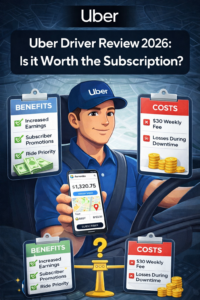
Hidden Costs to Watch Out For
Insurance upgrades for ride-sharing
Higher vehicle depreciation due to frequent rides
Parking fees in urban locations
Costs for cleaning or maintaining professional appearance
These hidden costs reduce the effective income and should be considered when calculating profitability.
Tips to Maximize Earnings
Drive during peak hours for surge pricing
Use fuel-efficient vehicles to reduce expenses
Track mileage and expenses for tax deductions
Focus on high-demand areas to minimize idle time
Maintain a high rating to access bonuses and promotions
Driver Experience in 2026
Many Uber Drivers praise flexibility but report challenges such as:
Income fluctuations depending on demand
Increased competition in urban markets
Expenses that reduce effective hourly earnings
Experience varies by location, vehicle efficiency, and driver strategy.
Safety and Security
Uber continues to prioritize safety for drivers and passengers:
Real-time GPS tracking
Emergency contact and safety check-ins
Ride verification for both parties
These features ensure a safer working environment, which is especially important in 2026.
Is Uber Driving Worth It in 2026?
Worth it if:
You want flexible income opportunities
You can track expenses and optimize routes
You live in a city with high ride demand
Less ideal if:
You seek job stability, benefits, or guaranteed pay
You are in a low-demand area with fewer ride requests
Uber driving can supplement income or serve as a primary source of earnings if managed strategically.
Conclusion
Uber Driver in 2026 remains a viable gig economy opportunity. While there is no subscription fee, drivers must account for operational costs and self-employment taxes. Those who use the app efficiently, track expenses, and drive strategically can maximize earnings and make Uber a profitable venture.
Ultimately, whether Uber is “worth it” depends on your goals, location, and ability to manage costs effectively.