The $1,000 smartphone price bracket has emerged as the most fiercely competitive segment in consumer technology. In past generations, choosing a non-Ultra flagship meant accepting painful hardware compromises: lower display resolutions, sluggish charging speeds, plastic frames, or stripped-down telephoto cameras. In 2026, however, Samsung and Google have elevated their tier-two flagships into bona fide powerhouse contenders. Consumers with a $1,000 budget face one of the most compelling decisions in modern consumer tech: the expansive, high-throughput Samsung Galaxy S24 Plus versus Google’s groundbreaking, palm-friendly imaging titan, the Pixel 9 Pro.
This showdown does not merely pit Galaxy S24 Plus vs Pixel 9 Pro; it embodies the classic dilemma between a compact pro vs large phone experience. While Samsung offers an expansive 6.7-inch QHD+ canvas backed by Qualcomm’s raw Snapdragon 8 Gen 3 horsepower, Google disrupted the market by delivering uncompromised "Pro" cameras—including a 5x optical periscope lens and 16 gigabytes of RAM—inside a dense, pocket-friendly 6.3-inch form factor. Deciding on the best 1000 flagship Android device requires an objective Samsung vs Google flagship 2026 evaluation balancing battery endurance, daily ergonomics, thermal sustained gaming, on-device artificial intelligence, and long-term 7-year software commitments. This comprehensive technical comparison benchmarks both flagships based on published specifications, lab display tests, battery drain analytics, and expert user reviews.
Pricing & Variant Notice: Both devices launch at a standard baseline MSRP of $999. In certain international regions outside North America, the Galaxy S24 Plus features Samsung's Exynos 2400 chipset rather than Qualcomm Snapdragon silicon. Google Pixel 9 Pro features the identical Tensor G4 processor worldwide. Live retail prices and trade-in promotional values fluctuate; confirm current pricing on official Google and Samsung storefronts.
Form Factor and Ergonomics: Massive Canvas vs One-Handed Mastery
The most immediate and profound differentiator between these two smartphones is physical size and hand feel.
Google Pixel 9 Pro: The Pocket-Friendly Miracle
For years, mobile photographers who demanded periscope telephoto zoom lenses were forced to purchase giant, cumbersome phablets exceeding 6.8 inches. Google changed the industry by packing its absolute best camera system—the identical triple-lens hardware found on the giant Pixel 9 Pro XL—into a compact 6.3-inch chassis. The Pixel 9 Pro features flat, satin-finished aerospace aluminum rails, symmetrical bezels, and a silky matte rear glass finish. Weighing 199 grams with a narrow 72mm width, it rests with effortless security in the palm. You can type one-handed with your thumb reaching all corners of the screen, and slide the device into tight front jeans pockets without discomfort.
Samsung Galaxy S24 Plus: Expansive Multimedia Real Estate
Samsung engineered the Galaxy S24 Plus for power users who consume immense volumes of digital media, split-screen multitask, and read lengthy documents. Weighing virtually the exact same mass (196 grams), Samsung managed to stretch the display to an expansive 6.7 inches thanks to razor-thin, uniform bezels. The S24 Plus features an Armor Aluminum frame with a soft, satin-touch finish. While it is noticeably wider (75.9mm), making one-handed reach challenging for smaller hands, the extra visual real estate provides an immersive, cinematic experience for streaming YouTube, playing games, and editing documents that no compact phone can match.
Display Technology: Super Actua vs Dynamic AMOLED 2X
Both manufacturers are undisputed global leaders in display fabrication, packing LTPO OLED panels capable of scaling dynamic refresh rates from 1Hz to 120Hz to preserve battery life.
Pixel 9 Pro Super Actua Display
The Pixel 9 Pro features a 6.3-inch Super Actua LTPO OLED with an extraordinarily sharp resolution of 1280 x 2856 pixels (a dense 495 ppi). Google prioritized outdoor legibility: the panel achieves a blinding 2,000 nits in High Brightness Mode (HBM) and peaks at 3,000 nits on HDR highlights. Even under direct desert sunlight, text remains pin-sharp, contrast is deep, and reflections are well controlled. Its compact dimensions make the pixels virtually invisible to the naked eye.
Samsung Galaxy S24 Plus QHD+ Display
In a major victory for Samsung fans, the company upgraded the S24 Plus display back to a true QHD+ resolution (3120 x 1440 pixels at 513 ppi), matching the flagship Ultra. The 6.7-inch Dynamic AMOLED 2X panel achieves 2,600 nits of peak brightness with vivid, punchy colors and deep contrast. While it lacks the anti-reflective coating found exclusively on the S24 Ultra, Samsung’s "Vision Booster" algorithm dynamically tone-maps shadows when outdoors, ensuring outstanding legibility across all environments.
Comprehensive Hardware Specifications Comparison
The table below provides a structured technical comparison between the Galaxy S24 Plus and the Pixel 9 Pro, evaluating their silicon architectures, camera arrays, battery capacities, and software commitments.
Hardware Metric | Samsung Galaxy S24 Plus | Google Pixel 9 Pro |
Display Size & Panel | 6.7-inch QHD+ Dynamic AMOLED 2X (1–120Hz, Flat) | 6.3-inch Super Actua LTPO OLED (1–120Hz, Flat) |
Resolution & Density | 3120 x 1440 pixels (~513 ppi) | 1280 x 2856 pixels (~495 ppi) |
Processor (SoC) | Snapdragon 8 Gen 3 for Galaxy (4nm) / Exynos 2400 | Google Tensor G4 (4nm with Titan M2) |
RAM Configuration | 12 GB LPDDR5X | 16 GB LPDDR5X (Dedicated AI memory) |
Storage Tiers | 256 GB / 512 GB (UFS 4.0) | 128 GB / 256 GB / 512 GB / 1 TB (UFS 3.1) |
Primary Camera | 50 MP (f/1.8, Dual Pixel PDAF, OIS) | 50 MP (f/1.68, Octa PD, OIS) |
Telephoto Camera | 10 MP 3x Optical Telephoto (f/2.4, OIS, 30x digital) | 48 MP 5x Optical Periscope (f/2.8, OIS, 30x Super Res) |
Ultra-Wide Camera | 12 MP (f/2.2, 120-degree FOV) | 48 MP with Macro Focus (f/1.7, 123-degree FOV) |
Front Selfie Camera | 12 MP (Dual Pixel AF, f/2.2) | 42 MP Phase Detection AF (f/2.2) |
Battery Capacity | 4,900 mAh | 4,700 mAh |
Wired Fast Charging | 45W Wired Fast Charge (65% in 30 mins) | 27W Wired Fast Charge (50% in 30 mins) |
Software Commitment | 7 Years of Android OS + Security Updates | 7 Years of Android OS + Security + Pixel Drops |
Baseline MSRP | $999 (Includes 256 GB baseline storage) | $999 (Includes 128 GB baseline storage) |
Note: Pricing reflects standard launch MSRP. In North America, the S24 Plus includes 256 GB of baseline storage, whereas the Pixel 9 Pro starts at 128 GB at the identical $999 price point.
Performance and Gaming: Snapdragon Muscle vs Tensor Machine Learning
The processing hardware under the hood reveals the divergent operational focuses of Samsung and Google.
Qualcomm Snapdragon 8 Gen 3 on the S24 Plus
If you play demanding 3D games (like Call of Duty: Warzone, Genshin Impact, or Nintendo Switch emulation), the Galaxy S24 Plus is an undisputed beast. Backed by Qualcomm’s Adreno 750 GPU and a massive internal vapor cooling chamber, the S24 Plus delivers blistering graphics rendering with rock-solid 60fps to 120fps sustained frame rates. Apps install and launch with instantaneous snap thanks to ultra-fast UFS 4.0 storage architecture.
Google Tensor G4 on the Pixel 9 Pro
Google’s Tensor G4 was engineered for efficiency, on-device multimodal reasoning, and thermal stability rather than synthetic benchmark bragging rights. Backed by a massive 16 GB of RAM (with a dedicated partition reserved exclusively for Google’s Gemini Nano model), the Pixel 9 Pro executes natural voice processing, on-device photo editing, and live transcription with zero stutter. Everyday UI scrolling is butter-smooth, and thanks to an integrated vapor chamber, the phone stays cool during photography. However, push graphical settings to ultra-high in 3D gaming titles, and the Tensor chip will throttle frame rates noticeably sooner than the Snapdragon silicon.
Camera Showdown: Google’s 5x Periscope Victory vs Samsung’s 3x Flexibility
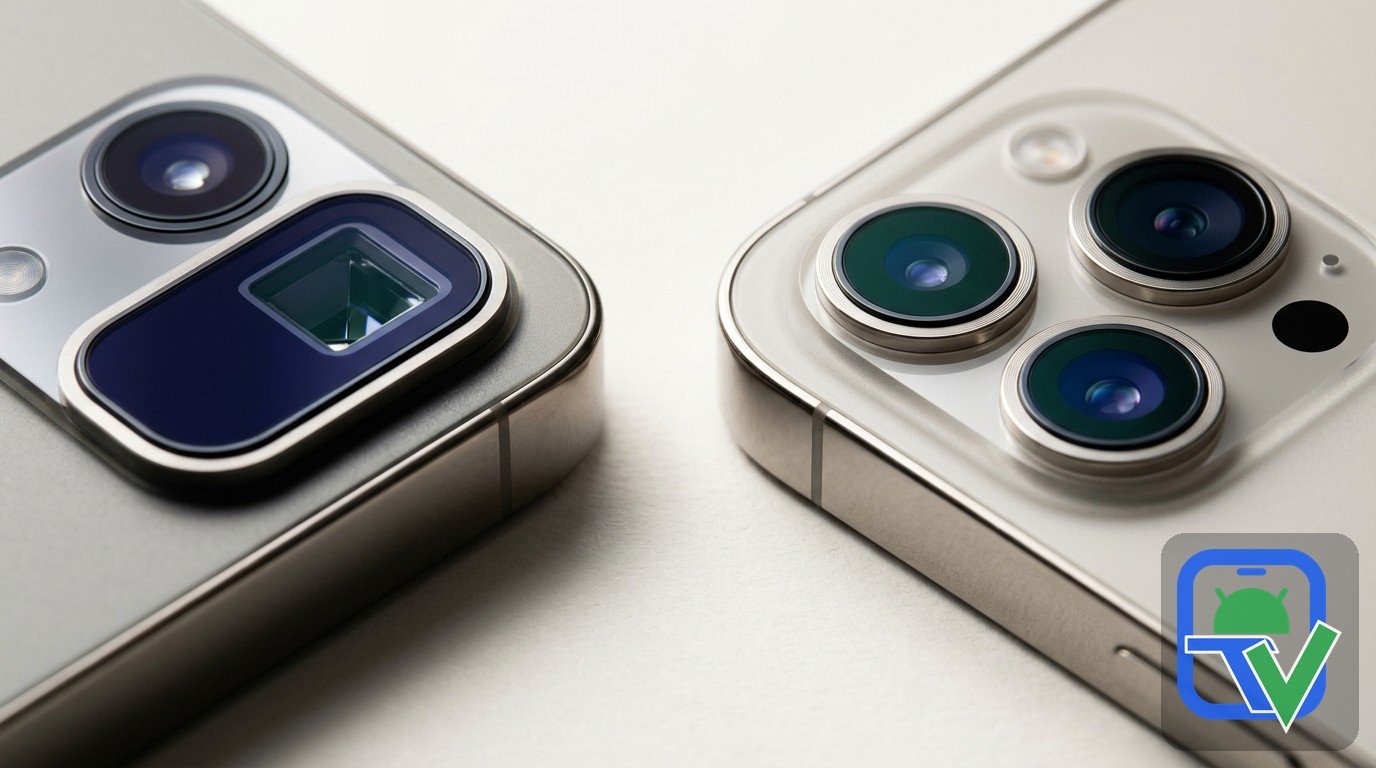
In mobile photography, the Pixel 9 Pro delivers an optical masterclass that outclasses the Galaxy S24 Plus across virtually every lighting condition.
1. Telephoto Reach and Macro Imaging
The Pixel 9 Pro houses a dedicated 48MP 5x optical periscope lens. At 5x and 10x magnification, the Pixel captures pin-sharp architectural details, distant wildlife, and concert performances with stunning clarity. Furthermore, the Pixel’s ultra-wide camera features an integrated macro motor, allowing tack-sharp close-up photography from barely two centimeters away.
The Galaxy S24 Plus features a modest 10MP 3x optical telephoto lens and an ultra-wide sensor lacking macro autofocus. While 3x optical zoom is great for casual headshots, pushing the S24 Plus beyond 5x or 10x results in soft, muddy digital noise. If zoom photography matters to you, the Pixel 9 Pro is in an entirely different league.
2. Point-and-Shoot Reliability and Color Science
Samsung’s image pipeline produces punchy, vibrant, and saturated JPEGs that look appealing on Instagram. However, Samsung still struggles with shutter lag indoors: if your subject is a moving child or a playful pet in living room lighting, the S24 Plus frequently outputs blurry shots.
The Pixel 9 Pro remains the undisputed point-and-shoot king. Google’s zero-shutter-lag computational HDR+ pipeline freezes moving action with surgical precision. Skin tones across all ethnicities are rendered with authentic, lifelike fidelity via Real Tone algorithms, and shadows are cleanly lifted without artificial noise.
Battery Life and Charging Speed: Samsung’s Endurance Advantage
When it comes to power delivery and battery endurance, the larger physical chassis of the Galaxy S24 Plus yields a decisive victory.
- Battery Life: The Galaxy S24 Plus packs a generous 4,900mAh battery. Combined with the high electrical efficiency of the Snapdragon 8 Gen 3 chipset, the phone easily delivers 8.5 to 10 hours of active screen-on time, frequently surviving two full days of moderate use. The Pixel 9 Pro houses a respectable 4,700mAh cell that comfortably powers through a full 16-hour day (averaging 6.5 to 7.5 hours of screen time), but power users will need to charge by bedtime.
- Wired Charging Speed: The Galaxy S24 Plus supports true 45W wired fast charging, taking the device from 0% to 65% in barely 30 minutes, with a full top-up taking under 60 minutes. The Pixel 9 Pro caps at 27W wired charging, requiring roughly 80 to 85 minutes for a full charge cycle.
Software and Artificial Intelligence: 7-Year Horizons
In 2026, both Google and Samsung officially guarantee an unprecedented 7 full years of Android operating system upgrades and monthly security patches, keeping both devices supported into 2031.
Samsung One UI 6 / 7 Experience
One UI provides unmatched power-user flexibility: Samsung DeX desktop mode, deep multitasking window split screens, edge panels, and the comprehensive Good Lock customization engine. Galaxy AI features—such as Circle to Search, live phone call translation, and web page summarization—provide solid daily utility.
Google Pixel UI and Feature Drops
The Pixel 9 Pro delivers clean, minimalist software with exclusive AI superpowers: Pixel Screenshots (semantic on-device image search), Call Screen (which answers unknown callers automatically and transcribes their intent), Add Me camera features, and quarterly Pixel Feature Drops that consistently inject new capabilities into the phone.
Frequently Asked Questions (FAQ)
Is 128 GB of baseline storage on the Pixel 9 Pro enough for a $1,000 phone?
For many power users, 128 GB is tight. Samsung delivers significantly better baseline value by providing 256 GB of high-speed UFS 4.0 storage standard on the $999 S24 Plus. Upgrading the Pixel 9 Pro to 256 GB pushes its retail price to $1,059.
Does the Galaxy S24 Plus support the Samsung S Pen stylus?
No. S Pen digitizer hardware is exclusive to the Galaxy S24 Ultra and Galaxy Z Fold series. The S24 Plus works only with standard capacitive touch styluses, offering no pressure sensitivity or palm rejection.
Can the Pixel 9 Pro shoot 8K video?
Yes, through Google’s cloud-based Video Boost service. The camera records 4K footage and uploads it to Google Cloud servers, where neural upscaling algorithms reconstruct an 8K video file with enhanced Night Sight color grading. The Galaxy S24 Plus can record 8K 30fps video locally on the device in real time.
Which phone has the better ultrasonic fingerprint scanner?
Both devices feature cutting-edge ultrasonic in-display fingerprint sensors. They unlock instantaneously with a light tap, even if your thumbs are damp or greasy, far outperforming older optical fingerprint sensors.
Which phone feels more durable in daily use?
Both smartphones feature IP68 dust- and water-resistance. Samsung utilizes Gorilla Glass Victus 2 on front and back with Armor Aluminum. Google uses Gorilla Glass Victus 2 with polished aerospace aluminum. Both handsets are exceptionally durable and rigid, resisting bends and drops admirably.
Does the Galaxy S24 Plus support satellite messaging?
Both devices support emerging Android carrier-based satellite messaging frameworks through supported cellular network partners (such as T-Mobile's direct-to-cell satellite constellation) for emergency off-grid SOS communications.
Final Verdict: Which $1,000 Flagship Should You Buy?
The battle between the Galaxy S24 Plus vs Pixel 9 Pro is a clash between hardware endurance and optical perfection:
- Buy the Samsung Galaxy S24 Plus If: You crave an expansive 6.7-inch QHD+ display, demand all-day multi-day battery life with 45W fast charging, play intensive 3D games with the Snapdragon 8 Gen 3, appreciate Samsung DeX desktop computing, and want 256 GB of baseline storage for your $1,000 investment.
- Buy the Google Pixel 9 Pro If: You want the absolute best pocket-friendly pro phone on the market. You demand elite 5x periscope telephoto reach, zero-shutter-lag point-and-shoot camera excellence, 16 GB of RAM, pure Google AI intelligence, and a phone you can comfortably use with one hand.
Both handsets justify their four-figure investments. Your choice comes down to whether your lifestyle thrives on Samsung's big-screen endurance or Google's compact photographic brilliance in 2026.