The annual clash between Samsung and Apple represents the absolute summit of consumer mobile technology. For power users, creative professionals, and luxury smartphone buyers, no two devices command greater market influence than the Samsung Galaxy S24 Ultra and the Apple iPhone 16 Pro Max. Both represent the zenith of engineering: sculpted aerospace-grade titanium chassis, cutting-edge 3-nanometer silicon architectures, multi-lens camera systems pushing computational imaging boundaries, and generative artificial intelligence integrated directly into their operating systems.
Yet, choosing between the Galaxy S24 Ultra vs iPhone 16 Pro Max in 2026 involves far more than picking between Android and iOS. It is an evaluation of opposing design principles. Samsung delivers an uncompromising productivity powerhouse complete with a built-in S Pen stylus, revolutionary anti-reflective display glass, and desktop-class window management. Apple counters with cinematic video mastering, exceptional silicon thermal efficiency, unified cross-device continuity across macOS, and dedicated hardware controls. This comprehensive Samsung vs Apple flagship 2026 evaluation delivers an in-depth titanium phone comparison, pitting Samsung's anti reflective screen vs ceramic shield optics and analyzing daily performance based on published manufacturer specifications, thermal benchmarks, and expert reviews.
Pricing & Trade-In Notice: Baseline pricing, storage tier premiums, and carrier trade-in promotions referenced in this guide reflect manufacturer suggested retail prices (MSRP) at publication. Regional tax structures, carrier contract subsidies, and seasonal promotions fluctuate over time; please verify live pricing directly on the official Apple and Samsung online stores.
Design and Ergonomics: The Titanium Heavyweights
Both flagship giants embraced Grade 5 titanium frames, abandoning glossy stainless steel and polished aluminum in favor of lighter mass, increased tensile strength, and refined matte textures.
Samsung Galaxy S24 Ultra: Boxy Architectural Authority
The Galaxy S24 Ultra commands immediate visual attention with its sharp, square 90-degree corners, completely flat front and back glass, and satin-finished titanium rails. Moving to a fully flat display was a celebrated engineering choice: it eliminates accidental edge touches and allows the integrated S Pen stylus to sketch edge-to-edge without slipping off curved boundaries. However, weighing 232 grams with wide 79mm shoulders and sharp corners, the S24 Ultra is an unapologetically massive device that makes its presence felt in pockets and during one-handed use.
Apple iPhone 16 Pro Max: Soft Contours and Dedicated Controls
Apple increased the display size of the iPhone 16 Pro Max to an expansive 6.9 inches, yet achieved this with remarkably slim, uniform bezels that keep the device manageable in hand. Unlike Samsung’s sharp right angles, Apple features gently rounded chassis corners and subtle contoured edges on the titanium mid-frame, making it noticeably more comfortable to hold against the palm during long phone calls. The iPhone 16 Pro Max also introduces two dedicated physical controls: the customizable Action Button on the left and the capacitive Camera Control button on the right, enabling one-touch camera launches and tactile focal zoom adjustments.
Display Technology: Gorilla Armor Anti-Reflective vs Ceramic Shield
While both handsets house top-tier OLED displays supporting dynamic 1Hz to 120Hz refresh rates, Samsung delivered the single biggest optical breakthrough in modern display history with Corning Gorilla Armor.
Samsung's Anti-Reflective Gorilla Armor Advantage
The Galaxy S24 Ultra features a 6.8-inch Dynamic AMOLED 2X display with an exclusive optical coating: Corning Gorilla Armor. This glass reduces surface light reflections by an astounding 75% compared to standard smartphone glass. Sitting outdoors under direct sunlight or working beneath harsh fluorescent office lights, the S24 Ultra display looks like printed paper. Text remains rich, blacks stay deep, and screen glare virtually vanishes. Furthermore, with 2,600 nits of peak brightness, the S24 Ultra delivers arguably the finest outdoor viewing experience ever fitted to a mobile phone.
Apple's Ceramic Shield and 1-Nit Minimum Brightness
The iPhone 16 Pro Max features a 6.9-inch Super Retina XDR OLED panel with Apple’s latest-generation Ceramic Shield, formulated with dual-ion exchange chemistry for superior shatter resistance during accidental drops. While the iPhone achieves 2,000 nits of outdoor brightness, its glossy glass surface exhibits traditional reflections and glare when compared side-by-side with Samsung’s Gorilla Armor. However, Apple holds a major advantage in dark environments: the display can dial its brightness down to a minuscule 1 nit, making late-night reading exceptionally comfortable on sensitive eyes.
Comprehensive Hardware Specifications Comparison
The table below provides a structured technical comparison between the Galaxy S24 Ultra and the iPhone 16 Pro Max, highlighting their core silicon architectures, camera arrays, battery parameters, and software commitments.
Hardware Metric | Samsung Galaxy S24 Ultra | Apple iPhone 16 Pro Max |
Display Size & Panel | 6.8-inch Dynamic AMOLED 2X (1–120Hz, Flat) | 6.9-inch Super Retina XDR OLED (1–120Hz, Flat) |
Resolution & Density | 3120 x 1440 pixels (~505 ppi) | 2868 x 1320 pixels (~460 ppi) |
Screen Protection | Corning Gorilla Armor (75% Anti-Reflective) | Latest Ceramic Shield (Drop-focused) |
Processor (SoC) | Snapdragon 8 Gen 3 for Galaxy (4nm) | Apple A18 Pro (Second-gen 3nm) |
RAM Capacity | 12 GB LPDDR5X | 8 GB LPDDR5X (Unified memory) |
Storage Options | 256 GB / 512 GB / 1 TB (UFS 4.0) | 256 GB / 512 GB / 1 TB (NVMe) |
Primary Camera | 200 MP (f/1.7, OIS, Super Quad Pixel) | 48 MP Fusion (f/1.78, Sensor-shift OIS) |
Telephoto Cameras | 10 MP (3x optical) + 50 MP (5x periscope optical) | 12 MP (5x tetraprism optical periscope) |
Ultra-Wide Camera | 12 MP (f/2.2, 120-degree FOV) | 48 MP (f/2.2, Hybrid focus pixels) |
Productivity Hardware | Integrated Wacom S Pen stylus | Camera Control button + Action Button |
Battery Capacity | 5,000 mAh | ~4,685 mAh (Estimated teardown) |
Wired Charging Speed | Up to 45W wired (USB-PD PPS) | Up to 30W wired (Peak fast charge) |
Software Commitment | 7 Years of Android OS + Security Updates | Industry standard ~6–7 years of iOS support |
Starting MSRP | $1,299 (256 GB storage) | $1,199 (256 GB storage) |
Note: Pricing reflects baseline launch MSRP. Trade-in incentives and carrier promotional financing vary by region.
Silicon Supremacy: Snapdragon 8 Gen 3 vs Apple A18 Pro
Under the hood, both handsets house the most sophisticated mobile silicon ever fabricated.
Apple A18 Pro: Unmatched Single-Core Efficiency
Built on TSMC’s cutting-edge second-generation 3-nanometer node (N3E), the Apple A18 Pro features 6 CPU cores (2 performance and 4 efficiency cores) alongside a 6-core desktop-class GPU with hardware-accelerated ray tracing. In single-core CPU benchmarks, the A18 Pro leads the industry, delivering instantaneous app launches, buttery UI navigation, and unmatched power efficiency. It also features an upgraded 16-core Neural Engine boasting 35 TOPS (trillion operations per second) of machine learning compute for Apple Intelligence tasks.
Snapdragon 8 Gen 3 for Galaxy: Multi-Core and Sustained Gaming
Qualcomm’s customized Snapdragon 8 Gen 3 for Galaxy features a high-performance 1+5+2 octa-core architecture with overclocked CPU and GPU clocks. Backed by a vapor chamber that is 1.9 times larger than its predecessor, the S24 Ultra sustains exceptional framerates in demanding 3D games like Honkai: Star Rail and Genshin Impact. Backed by 12 GB of RAM (compared to the iPhone's 8 GB), the Galaxy S24 Ultra handles aggressive background multitasking, split-screen multi-window apps, and Samsung DeX desktop mode with zero memory reloads.
Camera Systems Compared: 200MP Detail vs Cinematic Mastery
Both flagship camera setups deliver pro-grade photography, but their optical configurations reflect different priorities.
Photography: Samsung's Focal Flexibility
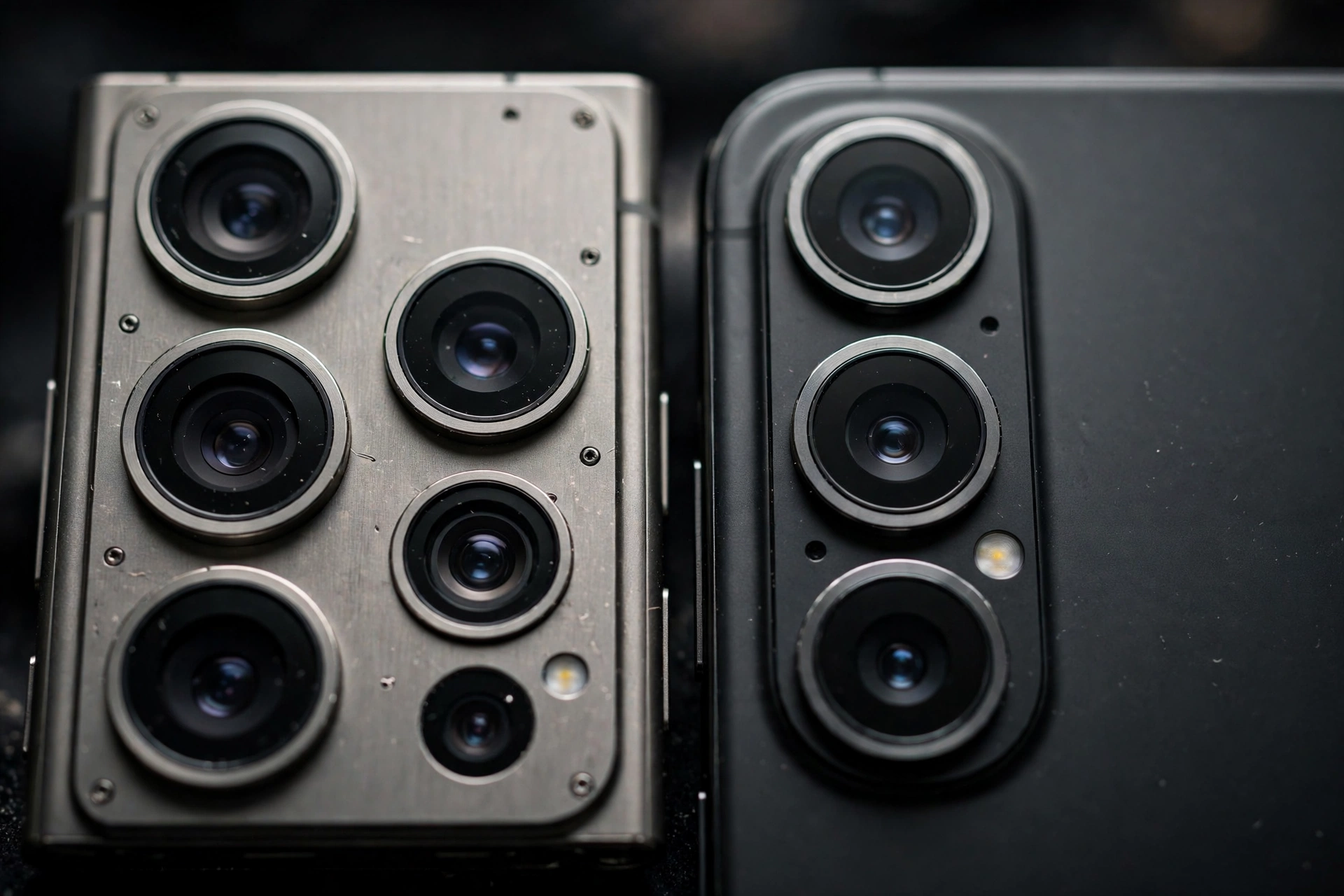
The Galaxy S24 Ultra features four physical rear camera sensors covering 0.6x, 1x, 3x, and 5x optical focal lengths. Having a dedicated 3x telephoto lens alongside a 50MP 5x periscope lens gives Samsung an enormous advantage in portraiture and intermediate zoom ranges. The primary 200MP sensor captures astonishing resolved detail in architectural shots, allowing you to crop deeply into a photo without pixelation. Samsung’s color tuning is punchy, vibrant, and ready for immediate social media sharing.
Videography: Apple’s Unrivaled Cinema Suite
While the S24 Ultra captures excellent 8K video, the iPhone 16 Pro Max remains the undisputed gold standard for mobile videography. The iPhone supports 4K at 120fps with Dolby Vision HDR, allowing breathtaking cinematic slow-motion capture. Furthermore, support for ProRes Log recording, ACES color workflows, and four studio-quality spatial audio microphones with "Audio Mix" (allowing you to isolate dialogue from background noise in post-production) makes the iPhone 16 Pro Max an indispensable tool for Hollywood creators and content production teams.
Productivity and Software Ecosystem: S Pen & DeX vs iOS Continuity
The daily user experience diverges sharply when evaluating productivity tools.
The Samsung S24 Ultra Productivity Suite
No phone matches the S24 Ultra as an autonomous mobile workstation:
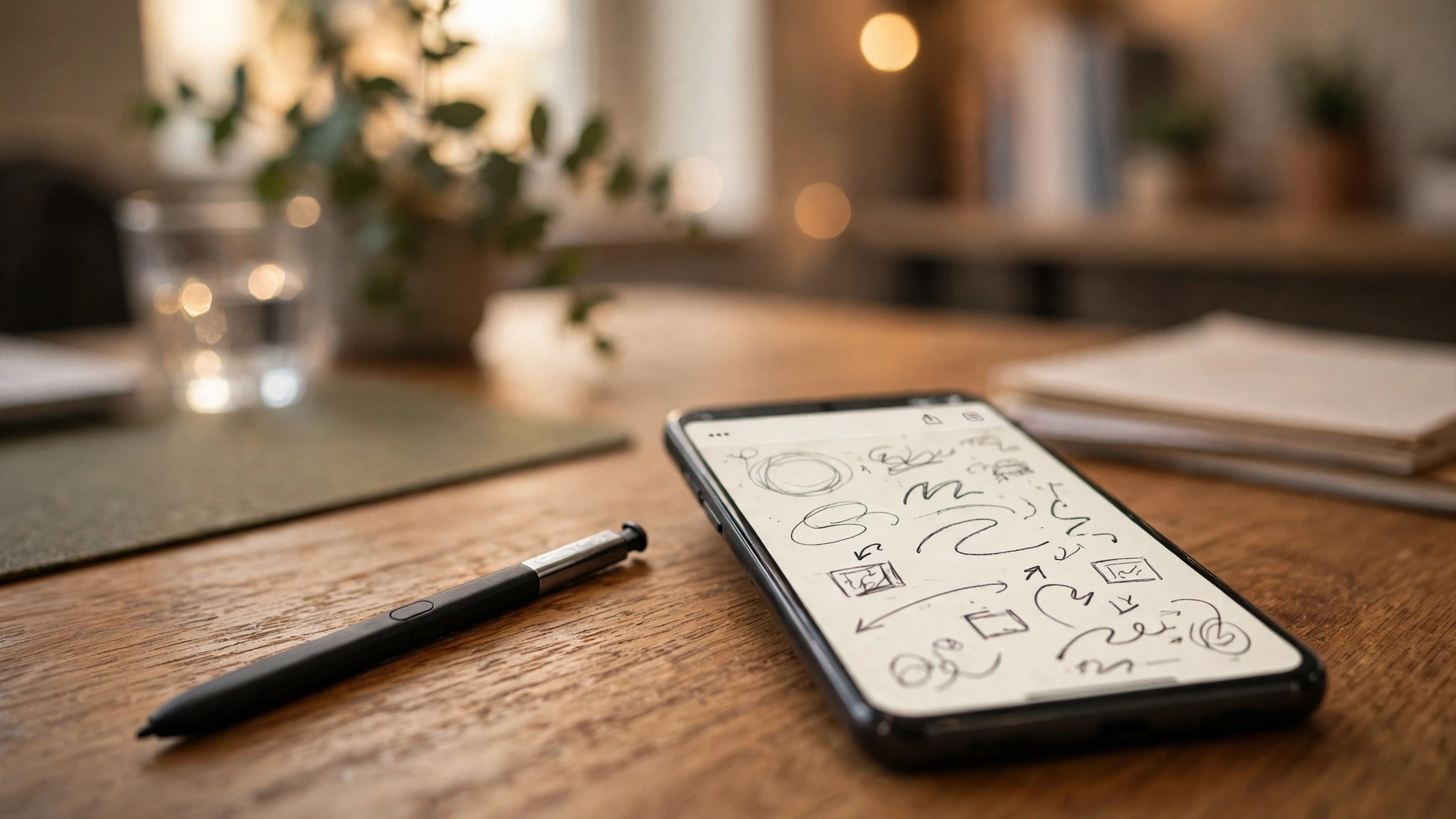
- Integrated S Pen: Ejecting the stylus allows you to sign contracts, jot handwritten notes on a dark screen, edit PDF blueprints, or trigger the camera shutter remotely via Bluetooth Air Actions.
- Samsung DeX: Connecting the phone to a monitor or TV via USB-C or wirelessly launches a full desktop computing environment, complete with resizable windows, taskbars, and keyboard/mouse support.
- Galaxy AI: Tools like Circle to Search, real-time two-way call translation, and transcript summarization enhance daily workflow efficiency.
The Apple Continuity Ecosystem
The iPhone 16 Pro Max derives its superpower from Apple's unified walled garden:
- Ecosystem Continuity: Features like Universal Clipboard (copying text on iPhone and pasting on Mac), AirDrop, AirPlay, and seamless Apple Watch unlock provide a frictionless multi-device experience.
- Apple Intelligence: System-wide writing tools, priority notification summaries, and contextual Siri assistance streamline daily correspondence.
Battery Life and Real-World Endurance
Both devices are absolute two-day battery champions under moderate use, but Apple’s silicon efficiency gives it an edge:
- iPhone 16 Pro Max: Thanks to the efficiency of the 3nm A18 Pro and aggressive iOS background power management, the iPhone routinely delivers 9 to 11 hours of active screen-on time, making it one of the longest-lasting smartphones ever tested. Wired charging reaches 50% in roughly 30 minutes with a 30W adapter, and MagSafe wireless charging tops out at 25W.
- Galaxy S24 Ultra: The 5,000mAh battery easily provides 7.5 to 9 hours of screen-on time, effortlessly powering through intensive workdays. Samsung supports faster 45W wired charging, achieving a 65% charge in 30 minutes, though wireless charging caps at 15W.
Frequently Asked Questions (FAQ)
Does the anti-reflective screen on the S24 Ultra scratch easily?
No. In standardized Mohs hardness scratch testing, Corning Gorilla Armor exhibited superior scratch resistance compared to traditional aluminosilicate glass, resisting fine micro-scratches up to level 7 on the Mohs scale. However, installing a standard glossy tempered glass screen protector will negate the anti-reflective properties; users should look for specialized anti-reflective screen protectors to preserve the effect.
Can the iPhone 16 Pro Max transfer files quickly over USB-C?
Yes. The iPhone 16 Pro Max features a USB-C 3.2 Gen 2 controller capable of transfer speeds up to 10 Gbps (identical to the Galaxy S24 Ultra). However, Apple includes only a standard USB 2.0 (480 Mbps) cable in the box; you must purchase a certified 10 Gbps USB-C cable separately to achieve high-speed transfers or record ProRes video directly to external SSD drives.
Which phone receives software updates for longer?
Samsung officially committed to 7 full years of Android OS upgrades and security patches for the Galaxy S24 Ultra (supported through 2031). Apple does not state fixed timeframes, but historically provides 6 to 7 years of full iOS updates. In 2026, both devices offer industry-leading long-term software support.
Which device has the better zoom camera at 10x magnification?
Both phones deliver remarkably sharp 10x images, but through different methods. The S24 Ultra utilizes a 50MP 5x periscope sensor with in-sensor pixel cropping and AI upscaling. The iPhone 16 Pro Max uses a 12MP 5x tetraprism lens with computational enhancement. The S24 Ultra generally retains slightly more micro-text detail at 10x and is significantly superior at extreme zoom levels (30x to 100x).
Is the Samsung S Pen compatible with the iPhone?
No. The S Pen relies on a Wacom EMR digitizer layer embedded beneath the Samsung display panel. The iPhone 16 Pro Max lacks an active digitizer and will not respond to an S Pen.
Which phone offers better satellite connectivity in emergencies?
Both devices support emergency satellite messaging. Apple offers Emergency SOS via Satellite and Roadside Assistance via Satellite in over 16 countries. Samsung integrates Android’s native satellite connectivity infrastructure via supported carrier networks (such as T-Mobile and satellite partners) for emergency off-grid messaging.
Final Verdict: Which Ultra Flagship Reigns Supreme?
The battle between the Galaxy S24 Ultra vs iPhone 16 Pro Max represents a clash of two flawless execution models:
- Buy the Samsung Galaxy S24 Ultra If: You demand the ultimate productivity machine. You value the game-changing anti-reflective Gorilla Armor display, the built-in S Pen stylus, versatile multi-focal camera zoom, desktop DeX capabilities, and 7 years of Android platform upgrades.
- Buy the Apple iPhone 16 Pro Max If: You prioritize unrivaled cinematic video quality, industry-leading battery endurance, ergonomic contoured titanium rails, tactile Camera Control hardware, and deep integration with the broader Apple hardware ecosystem.
Both handsets justify their four-figure price tags. Your decision should rest on whether your daily digital life thrives on the open productivity of Android or the polished continuity of Apple’s ecosystem.